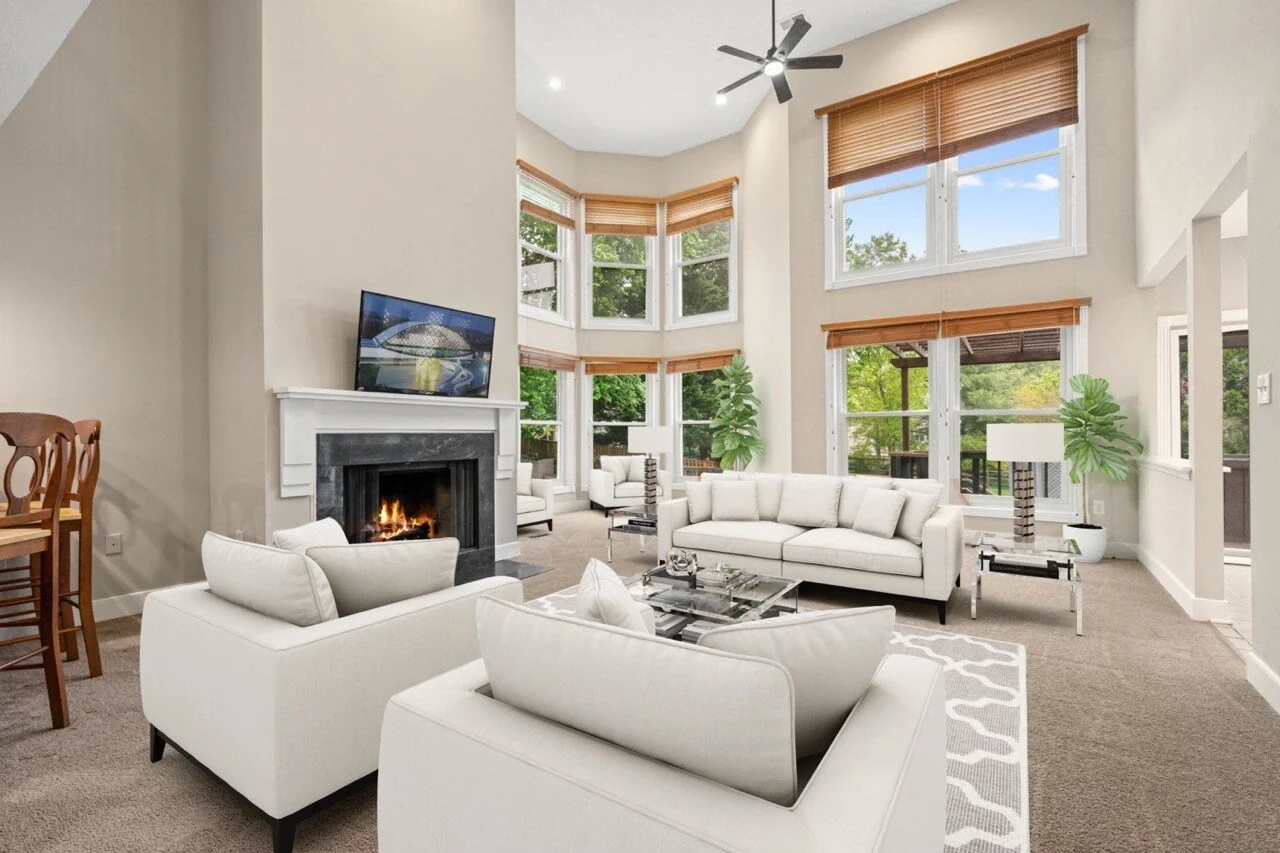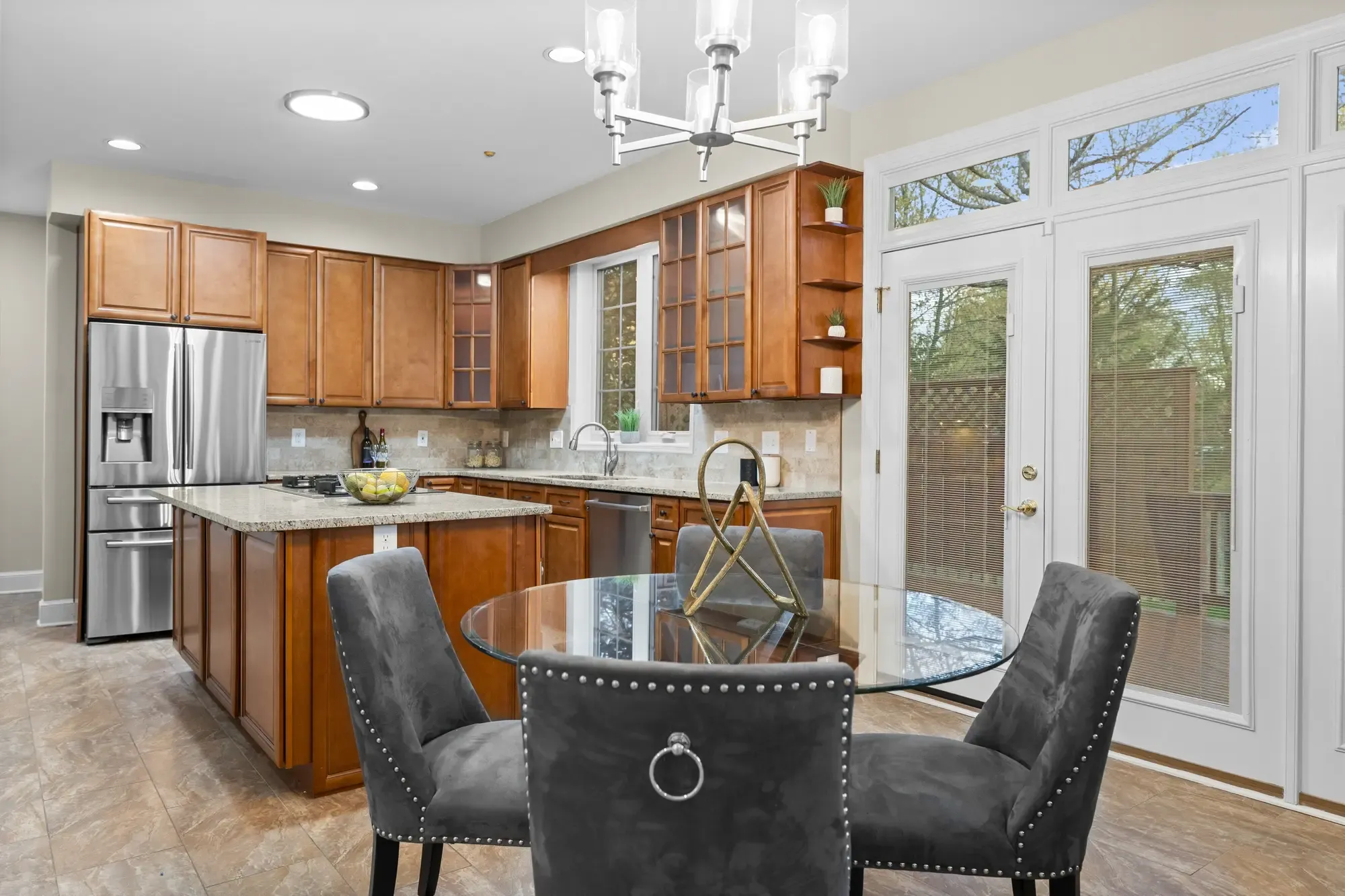
A property manager I work with in Arlington called me last month about a two-bedroom condo that had been listed for three weeks with zero applications. Good unit, good location, priced right for the market. I pulled up the listing on Zillow and immediately saw the problem: eight phone photos, dim lighting, bathroom shot with the toilet lid up, and the first image was a crooked angle of the hallway.
We reshot it in 45 minutes. Fifteen professional photos — bright, clean, properly composed. She relisted that evening. Four applications by the weekend.
The condo didn’t change. The price didn’t change. The long-term rental photography changed.
Every day your rental sits vacant, you’re losing money. On a $2,500/month rental — pretty typical for the DC, Virginia, and Maryland market — that’s $83 per day. One week empty: $625 gone. Two weeks: $1,250. A full month between tenants, plus turnover costs, and you’re looking at well over $4,500 that’s just… evaporated.
Most landlords understand this math. They price carefully. They write detailed descriptions. They respond to inquiries quickly. But then they post listing photos taken with their phone at 6 PM on a Tuesday when the lighting is terrible and last night’s dishes are still on the counter.
And they wonder why the listing sits.
Here’s the thing: I’ve been shooting rental properties in the DMV for years, and I can tell you that rental property photography is where professional quality makes the biggest difference — even more than in the for-sale market. Not because rentals are harder to photograph, but because so few landlords bother. The bar is so low that professional photos don’t just look better. They look like they’re from a completely different planet.
A study by PlanOlabs across 500 rental properties found that listings with professional photography leased 11% faster and rented for 10% more than properties with poor-quality photos. On a $2,500/month rental, that 10% is $250 extra per month — $3,000 per year — from a one-time investment of $199.
If you’ve never considered hiring a photographer for a rental property, this is why you should.
Why Rental Listings Actually Need Professional Photos More Than For-Sale Listings
That might sound backward. After all, agents selling million-dollar homes are the ones who typically hire photographers. But think about how renters actually search.
When someone’s shopping for a rental on Zillow, Apartments.com, or Rent.com, they’re not leisurely browsing three or four options. They’re comparing dozens of listings in a single session — scrolling fast, spending a few seconds on each thumbnail before deciding to click or keep moving. 70% of that browsing happens on a phone, where every listing is a tiny thumbnail competing for attention.
60% of renters say listing photos are “extremely or very important” to their decision, according to Zillow’s own data. That first photo isn’t just a picture of your property. It’s the entire first impression. It determines whether someone clicks to learn more or scrolls to the next listing.
Here’s why this matters even more for rentals than for sales: in the for-sale market, professional photography is becoming standard. Most agents use professional photos now, which means they all look good. The photos blend together. But in the rental market? Most listings still feature phone photos with bad lighting, crooked angles, cluttered counters, and unflattering shadows. It’s a sea of mediocrity.
That means professional photos in a rental listing don’t just look slightly better. They look dramatically, obviously, undeniably better. They stop the scroll. The data backs this up: listings with professional photos generate 61% more views and up to 40% more inquiries compared to listings with amateur images. Whether it’s a single-family rental photography situation or a condo in a 200-unit building, the dynamic is the same — professional photos stand out because almost nobody else is using them.
What those phone photos are really saying
Here’s something most landlords don’t think about: bad photos don’t just fail to showcase the property. They actively signal something to prospective tenants.
Dark rooms with blown-out windows say: this landlord doesn’t pay attention to detail. Cluttered backgrounds say: the property isn’t well-maintained. Crooked, distorted wide-angle phone shots say: this person is cutting corners.
Whether it’s fair or not, tenants who see sloppy photos assume sloppy management. The really good tenants — the ones who pay on time, take care of the property, and renew their lease — they have options. And they’re choosing the listing that looks like the landlord actually cares.
Professional photos signal the opposite: this property is well-maintained, this landlord is professional, and this is a place worth living.
What to do right now: Pull up your current rental listing on Zillow or Apartments.com. Look at it on your phone — not your laptop, your phone. That’s how 70% of prospective tenants are seeing it. If those photos don’t make you want to click, they’re not making anyone else click either.
The Math That Makes This Easy
Let me make this concrete with real numbers from our market.
The vacancy cost:
- Average rent in DC: $2,425/month (~$81/day)
- Average rent in Arlington: $2,683/month (~$89/day)
- Let’s use $2,500/month as a round number: $83/day in lost rent
The photography investment:
- Professional rental photography: $199 for 15 photos (studios, 1-bedrooms)
- Larger properties (20-30 photos): $219-$249
The payoff:
- PlanOlabs study: professional photos reduce time-to-lease by 11%
- On a 30-day average vacancy, that’s roughly 3.3 fewer vacant days
- 3.3 days x $83/day = $274 saved — already more than the cost of the shoot
- Plus: 10% higher rent potential = $250/month = $3,000/year
Here’s the comparison:
| Strategy | Cost | First-Year Impact |
|---|---|---|
| Phone photos | $0 | Baseline vacancy, baseline rent, no competitive advantage |
| Professional photos ($199) | $199 | ~3 fewer vacant days ($274 saved), potential for 10% higher rent ($3,000/year), 61% more listing views |
A professional photo shoot pays for itself if it saves you 2.4 days of vacancy. That’s it. Two and a half days. Everything beyond that is pure upside.
And unlike many investments, this one compounds. Those photos work for every single time you relist the property — until you make significant changes to the unit. Most landlords get two to three years of use out of one set of professional photos.
What to do right now: Before your next turnover, book a professional shoot. At $199, it’s less than what you’ll spend on paint touch-ups. The ROI isn’t theoretical — it’s arithmetic.
What Rental Platforms Actually Reward
You might have heard that platforms like Zillow and Apartments.com give special treatment to listings with “verified” or “professional” photos. Let me be straightforward about what’s actually going on, because I think honesty matters more than marketing hype.
Neither Zillow Rental Manager nor Apartments.com currently runs a formal “verified professional photo” badge program. What they DO have are strict quality standards and algorithms that functionally reward professional-quality images.
Apartments.com requirements
Apartments.com requires photos to be at least 2,048 pixels on the longest side, landscape orientation, in full color with no heavy filters or effects. They prominently feature the first four photos at the top of every listing — and those images need to be high-resolution to display properly on both desktop and mobile. Phone photos frequently fail these standards, resulting in pixelated thumbnails and awkward cropping that makes the listing look unprofessional.
Zillow Rental Manager
Zillow recommends 22-27 photos for optimal listing engagement. Their platform accepts standard formats, but the algorithm behind search results rewards engagement signals — click-through rate, time spent on the listing, saves, and inquiry submissions. All of these metrics are significantly higher for listings with professional photos.
The bottom line on platforms
Professional photos don’t earn you a special badge. They earn you something better: more clicks, more time on your listing, more inquiries, and faster lease-up. The platforms’ algorithms see all of those signals and respond by showing your listing more prominently in search results. It’s not a program — it’s just how the math works.
And here’s a practical detail that matters: 70% of rental platform traffic comes from mobile devices. Phone photos that look passable on a laptop often look terrible on a phone screen — muddy colors, poor contrast, hard-to-read details. Professional photos are edited for clarity and contrast that reads well on every screen size.
What to do right now: Check your current listing photos against these platform requirements. On Apartments.com, are your images at least 2,048 pixels wide? Are they landscape orientation? On Zillow, do you have at least 22 photos? If any answer is no, your listing is underperforming before a single renter even sees it.
What to Photograph for a Long-Term Rental (And Why It’s Different From For-Sale Photography)
This is where most generic “rental photography” advice falls short. Photographing a long-term rental isn’t the same as photographing a home for sale, and it isn’t the same as photographing a vacation rental either. The tenant looking at your listing has fundamentally different priorities.
A buyer is asking: Is this worth the investment? Can I see myself building a life here? They respond to aspirational staging, architectural details, and lifestyle imagery.
A renter is asking: Can I live here comfortably for the next one to three years? They want to see the reality of daily life in this space. They’re practical. They’re comparing your listing against 20 others and making decisions fast.
Here’s what to focus on:
Kitchen — the most important room in a rental
Renters will cook in this kitchen every single day. They want to see:
- Appliances clearly visible — are they modern? Clean? Functional-looking?
- Counter space — is there room to actually prepare a meal?
- Storage — cabinets, pantry, drawers. Renters accumulate cookware and groceries
- Condition — clean grout, intact countertops, working fixtures. No detail is too small
Closets and storage — show them open
This is the biggest miss I see in rental listings. Either closets aren’t photographed at all, or they’re photographed closed. Open them. Show the depth, the shelving, the hanging space. For renters who are downsizing or moving from a larger space, closet photos can make or break the decision.
In-unit laundry — if you have it, flaunt it
In-unit laundry is one of the top amenities renters search for, especially in the DC and Arlington market where many older buildings lack it. If your unit has in-unit laundry, photograph it clearly. Don’t hide it in a closet shot — give it its own photo. This single feature can justify $100-$200 more per month in rent.
Bathrooms — clean, bright, honest
Renters know they can’t renovate. They need to see the bathroom as-is and feel comfortable with it. Bright, clean, well-lit bathroom photos with visible storage space (medicine cabinet, under-sink area) go a long way. Pro tip: if the bathroom is small, professional wide-angle photography makes it look accurate without the cramped distortion that phone cameras create.
Natural light and living spaces
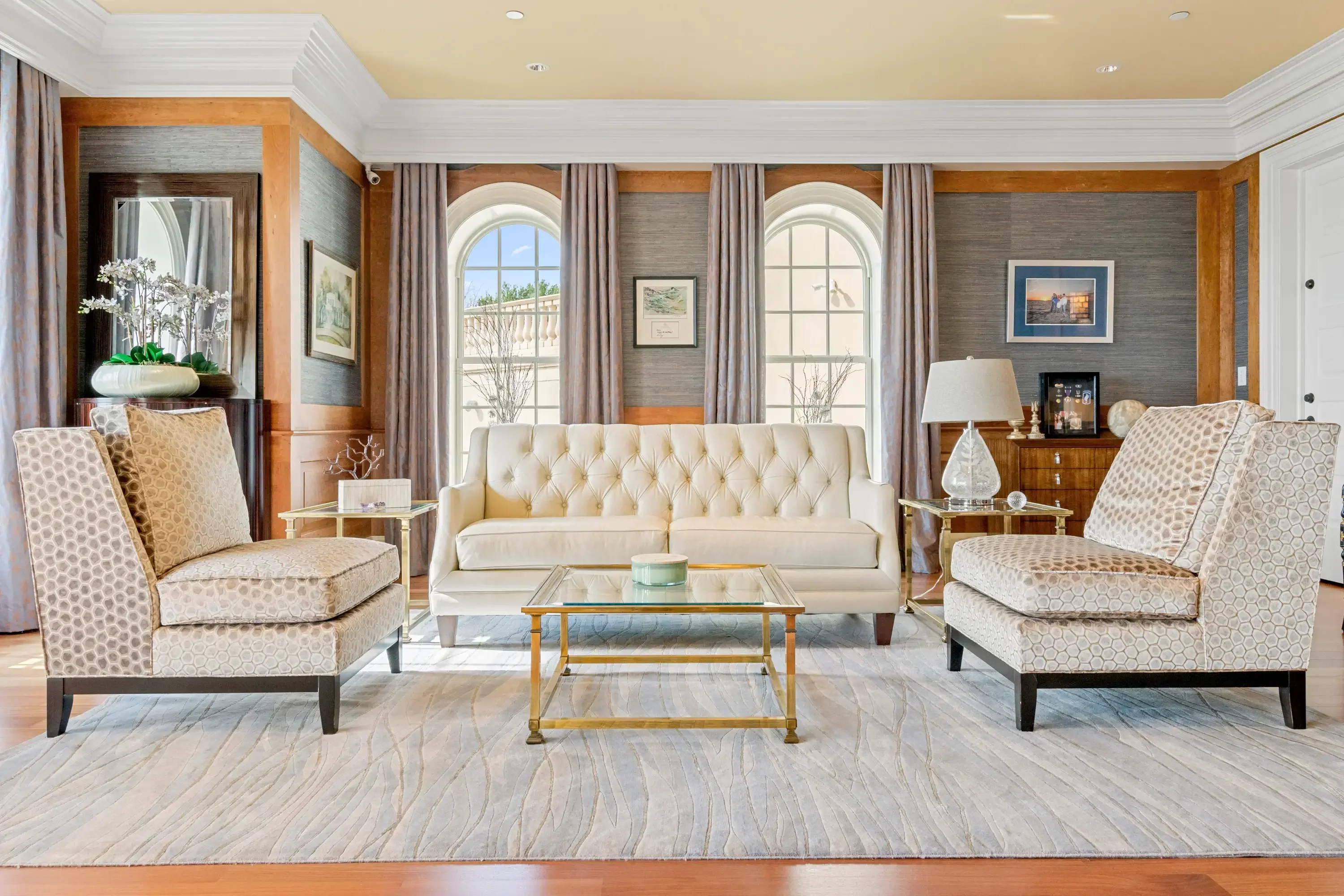
Photograph living rooms and bedrooms during the time of day when natural light is best. Renters spend the most time in these rooms. They want to see brightness, space, and warmth. A dark, cave-like living room photo — even if the room is actually bright — will kill interest instantly.
Outdoor space and parking
A patio, balcony, deck, or yard is a major selling point for long-term renters. Photograph it as a usable space, not just an afterthought. And don’t forget parking — especially in DC, Arlington, and Bethesda where parking can make or break a rental decision. Show the garage, the assigned spot, or the driveway clearly.
The neighborhood
One or two neighborhood context shots — the street view, a nearby park, the walk to Metro — help renters visualize their daily life. This is especially valuable for out-of-area tenants relocating to the DMV for government, military, or tech jobs.
The guiding principle: We’re not staging a dream. We’re showing someone where they’ll actually live. That honesty is what builds trust — and trust is what gets applications. Tips for preparing your property for a photo shoot →
What to do right now: Walk through your rental unit and make a list of what a renter would want to see. Open every closet, turn on every light, check every appliance. Then ask yourself: do my current listing photos show all of this? If not, you’re leaving out the information renters are using to make their decision.
For Property Managers: Scaling Property Management Photography Across Your Portfolio
Everything above applies whether you own one rental or a hundred. But if you’re a property manager turning over multiple units per month, you have an additional set of problems that single landlords don’t.
The consistency problem
I’ve talked to property managers who use a different photographer for every turnover. Sometimes it’s whoever’s available. Sometimes it’s an agent’s photographer who does it as a favor. The result: every listing in the portfolio looks different. Different editing styles, different quality levels, different photo counts, different turnaround times. Some listings look professional. Some look like they were shot on a flip phone.
For a PM building a brand, this inconsistency is a problem. Tenants who browse multiple listings from the same management company notice when the quality varies. And prospective property owners evaluating PMs to manage their investment definitely notice.
What to look for in a photography vendor
If you’re managing 10+ units, here’s what matters:
- Online booking system. You don’t have time for phone tag and email chains every time a unit turns over. You need to book a shoot in two minutes, pick a time slot, and move on. A vendor with an online ordering system saves you hours per month
- Consistent editing style. Every property in your portfolio should look like it belongs to the same brand. Same color temperature, same brightness, same quality standard. This only happens when you work with the same team every time
- Next-day delivery. Turnovers are time-sensitive. Every day between “unit is ready” and “listing is live with photos” is another day of vacancy. You need a vendor who delivers edited photos within 24 hours, not 5-7 business days
- Volume-friendly pricing. If you’re booking 5-20 shoots per month, the per-shoot cost should reflect that relationship. Ask about volume schedules and recurring client benefits
- One vendor for everything. Photos, floor plans, virtual tours — ideally from one team. This eliminates the need to coordinate multiple vendors per unit and ensures all media is consistent and delivered together
The compounding value
Here’s what I’ve seen happen when a property management company standardizes their photography: listings start performing consistently better across the entire portfolio. Vacancy days drop. The average rent creeps up because better-presented units justify higher pricing. The PM’s reputation improves because every listing they manage looks professional. And property owners start noticing — which means more doors under management.
It’s not dramatic overnight. But over six months, the cumulative impact on a 50-unit portfolio is significant.
I’ll be transparent — this is exactly what we do at Umedia, and it’s the model we’ve built for property managers in the DC, Virginia, and Maryland market. But the principle applies regardless of who you work with. If you’re managing a portfolio, the question is simple: Is your property management photography consistent, fast, and reliable — or is it a different gamble every turnover?
What to do right now: Look at the last five listings across your portfolio. Do they look like they came from the same management company? Same quality, same style, same level of professionalism? If not, inconsistent photography is quietly undermining your brand with every listing.
Virtual Staging for Vacant Rentals
Most rental photography happens between tenants, which means the unit is empty. And empty rooms are hard to photograph well — they lack scale, they feel cold, and renters struggle to visualize how their furniture will fit.
Virtual staging solves this problem at a fraction of the cost of traditional staging. Starting at $24 per photo, a skilled editor can digitally furnish an empty room with realistic furniture that helps renters see the potential.
The data on staging in general is clear: staged homes spend 73% less time on market, and 81% of buyers say it’s easier to visualize a staged property as their future home. The same psychology applies to renters — arguably even more so, because renters are looking at an empty space and trying to imagine living there for years, not just buying it.
For property managers turning over vacant units, virtual staging on three or four key photos (living room, primary bedroom, dining area) can be the difference between a listing that generates immediate interest and one that sits for an extra week.
The Bottom Line
I started this with a number: $83 per day. That’s what an empty rental costs you in the DC metro area.
A professional photo shoot costs $199. If it saves you three days of vacancy — and the data says it saves more than that — it has already paid for itself. If it helps you rent for $200 more per month because the listing looks like a well-maintained, professionally managed property instead of a phone-photo afterthought, you’re looking at $2,400 in additional annual revenue from a single shoot.
This isn’t a luxury investment. It’s not something only agents do for million-dollar listings. It’s the most straightforward ROI calculation in rental real estate.
Here’s where to start depending on where you are:
- If you own one rental property: Book a professional shoot before your next turnover. $199. Next-day delivery. See what happens to your inquiry volume. That’s all it takes to test this
- If you own 2-5 rental properties: Start with your next vacancy and compare the results — days to lease, number of applications, quality of applicants — against your previous listings with phone photos. The data will speak for itself
- If you’re a property manager: Find one photography vendor and standardize. Book three shoots with the same team. Evaluate the consistency of the results and the time you saved on coordination. Then scale from there
That property manager I mentioned at the beginning — the one in Arlington with the condo that sat for three weeks? She now books us for every turnover. Not because of a pitch, but because the first reshoot worked. Four applications in a weekend, lease signed within two weeks. Her owners noticed. The next property owner she onboarded asked specifically about her listing quality.
That’s how long-term rental photography pays for itself. Not just on the listing in front of you, but on every listing after it.
Umedia provides professional rental photography across DC, Virginia, and Maryland with next-day delivery. We work with single landlords and property management companies alike. See our rental photography for landlords → or book a shoot today.