I’ve been photographing homes across the DC, Virginia, and Maryland market for years now. And I can tell you — the call always sounds the same.
An agent reaches out, a little frustrated, sometimes a lot frustrated. The listing has been sitting for weeks. The seller is losing patience. The open houses are quiet. The showing feedback — when there is any — is vague. “Nice home, just not for us.”
And almost every time, when I pull up the listing online, I can see why.
It’s rarely one catastrophic problem. It’s usually a combination of small, fixable things that add up to a listing buyers scroll right past. If your listing is not selling, chances are it’s one or more of the seven issues below — and every single one of them is fixable. After working with over a thousand agents and shooting more than four thousand properties, I’ve seen these same patterns repeat. Here’s what’s going wrong and what to do about it.
Problem #1: The Price Is Wrong
I’m a photographer, not a pricing strategist. But I’d be doing you a disservice if I didn’t put this first, because no amount of beautiful media can overcome a price that doesn’t match the market.
77% of top-producing agents name overpricing as the number one reason listings don’t sell. And the math is punishing: the first two weeks on market generate the most buyer interest. Overprice during that window and you don’t just miss buyers — you train the entire market to skip your listing. By the time you drop the price, the damage is already done. A price reduction doesn’t read as “great deal.” It reads as “what’s wrong with this place?”
Here’s the part that really stings: homes that sell within the first 30 days typically close at or near asking price. Homes that sit past 90 days? They average 5-10% below asking. On a $550,000 home — pretty typical for our market here in the DMV — that’s $27,500 to $55,000 the seller loses by waiting.
What to do right now:
- If you’re past 3 weeks without offers, run a fresh CMA with today’s numbers — not the one from the listing appointment.
- Have the conversation with your seller. I know it’s not fun. Show them the data.
- If the seller won’t budge on price, the next six sections are about improving perceived value through better marketing. It’s not a substitute for correct pricing, but it absolutely moves the needle.
Problem #2: Your Listing Photos Are Killing Your Showings
This is the one I see every single day. And it’s the one that’s entirely within your control.
97% of home buyers start their search online. That first photo in your listing? It’s your storefront window. Your handshake. Your one shot at getting a buyer to click instead of scroll. And buyers spend 60% of their time looking at photos before they even glance at the description or the price.
I’m not being dramatic when I say the numbers here are staggering:
- Homes with professional photos sell 32% faster — that’s roughly 89 days on market versus 123 days with standard photos, according to NAR data
- Professional photos generate 118% more online views — more than double the eyeballs on your listing
- Listings with quality images get 137% more saves on Zillow and Realtor.com — those saves turn into showings
- Professionally photographed homes close for $3,400 to $11,200 more depending on price range, per Redfin’s research
Why smartphone photos don’t cut it
I get it — phone cameras have gotten incredible. But here’s what they still can’t do: handle the massive dynamic range inside a home (the difference between that bright window and the dark corner of the room), correct the wide-angle lens distortion that makes rooms look oddly shaped, or deliver the consistent white balance that makes every room feel cohesive and inviting.
The result of shooting with a phone? Blown-out windows. Dark corners. Color that shifts from warm to cool between rooms. Verticals that lean inward and make spaces feel cramped. Buyers don’t analyze these details consciously. They just feel like the home looks… off. And they scroll to the next listing.
I’ve reshot hundreds of listings that originally went live with phone photos. The difference isn’t subtle. It’s dramatic. New professional photos on the same home, same day, same furniture — and the online engagement doubles or triples.
What to do right now
Get a professional reshoot. MLS lets you swap photos anytime. Think of it as a soft relaunch — new photos give buyer agents a reason to look at your listing with fresh eyes.
Here’s the math that should make this an easy decision: professional photography starts at $119. A single price reduction on a $550,000 home — at the standard 3% — is $16,500. The reshoot costs a fraction of a single price drop. And the data says it actually works.
Problem #3: Photos Alone Aren’t Enough Anymore
Good photos are table stakes. But in today’s market, the listings that generate real momentum are the ones that give buyers a complete picture before they ever step foot in the door.
I’ve watched this shift happen over the last few years. Buyers now expect more — and the data backs up why it matters.
Video walkthroughs
Listings with video receive 403% more inquiries than listings without. I’ll say that again: four times the engagement. Photos show you what a kitchen looks like. Video shows you what it feels like to walk into it. The flow from room to room, the natural light changing through the day, the way the backyard connects to the living space — that’s what sells a home, and it’s what static images can’t capture.
73% of sellers say they prefer working with agents who use video. When you’re competing for listings, that number matters. How to choose the right videography service →
Drone and aerial photography
This is one of the most underused tools in real estate marketing, and the impact is enormous: homes with aerial photos sell 68% faster. Why? Because drone shots answer questions buyers didn’t even know they had. How big is the lot really? What’s behind the fence? How close is the park? What does the neighborhood actually look like from above?
I shoot aerials for everything from quarter-acre townhome lots to sprawling estates in Potomac. Even on smaller properties, the bird’s-eye view adds context and professionalism that makes the listing stand out. 83% of home sellers say they prefer agents who use drone photography. Complete guide to drone photography →
3D virtual tours
Matterport tours generated 49% more qualified leads in recent studies, and homes with 3D tours sold for 1.3% more on average. They’re especially powerful for out-of-area buyers (huge in the DMV with all the military and government relocations), vacant homes where scale is hard to judge from photos, and luxury properties where buyers expect a premium experience.
Floor plans
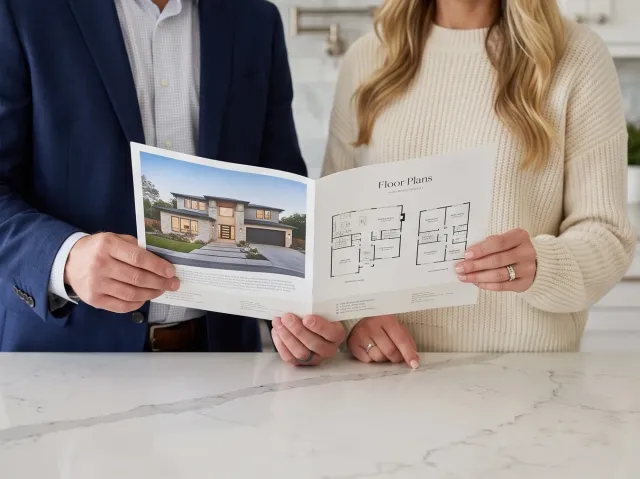
This one surprises people, but floor plans are consistently ranked as one of the most useful listing features by buyers. They answer the questions photos can’t: How do the bedrooms relate to each other? Is the kitchen truly open to the living room, or is there a wall? How big is that closet relative to the bedroom? A floor plan removes ambiguity — and ambiguity kills offers.
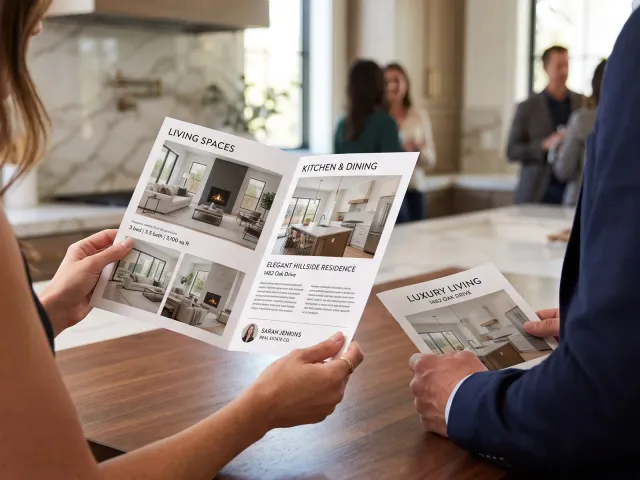
The key insight here: you don’t have to book each of these separately. A comprehensive media package can cover photos, floor plans, drone, video, and 3D tours in a single appointment. One visit to the property, next-day delivery, and your listing goes from “just photos” to a full marketing package that competes with anything on the market.
Problem #4: Buyers Can’t See Themselves Living There
I’ve photographed hundreds of vacant homes. And I’ll be honest — they’re the hardest to make look great. Empty rooms lack scale. They lack warmth. A buyer walks through an empty house and the emotional response is… nothing. That’s the opposite of what you need.
The staging data is clear:
- Staged homes spend 73% less time on market
- 81% of buyers say it’s easier to visualize a staged property as their future home
- Staging can increase a home’s perceived value by 6-20%
Traditional staging works beautifully — but it’s expensive ($1,500-$5,000 per month) and takes time to coordinate. When a listing is already sitting, adding another week of logistics can feel like the wrong move.
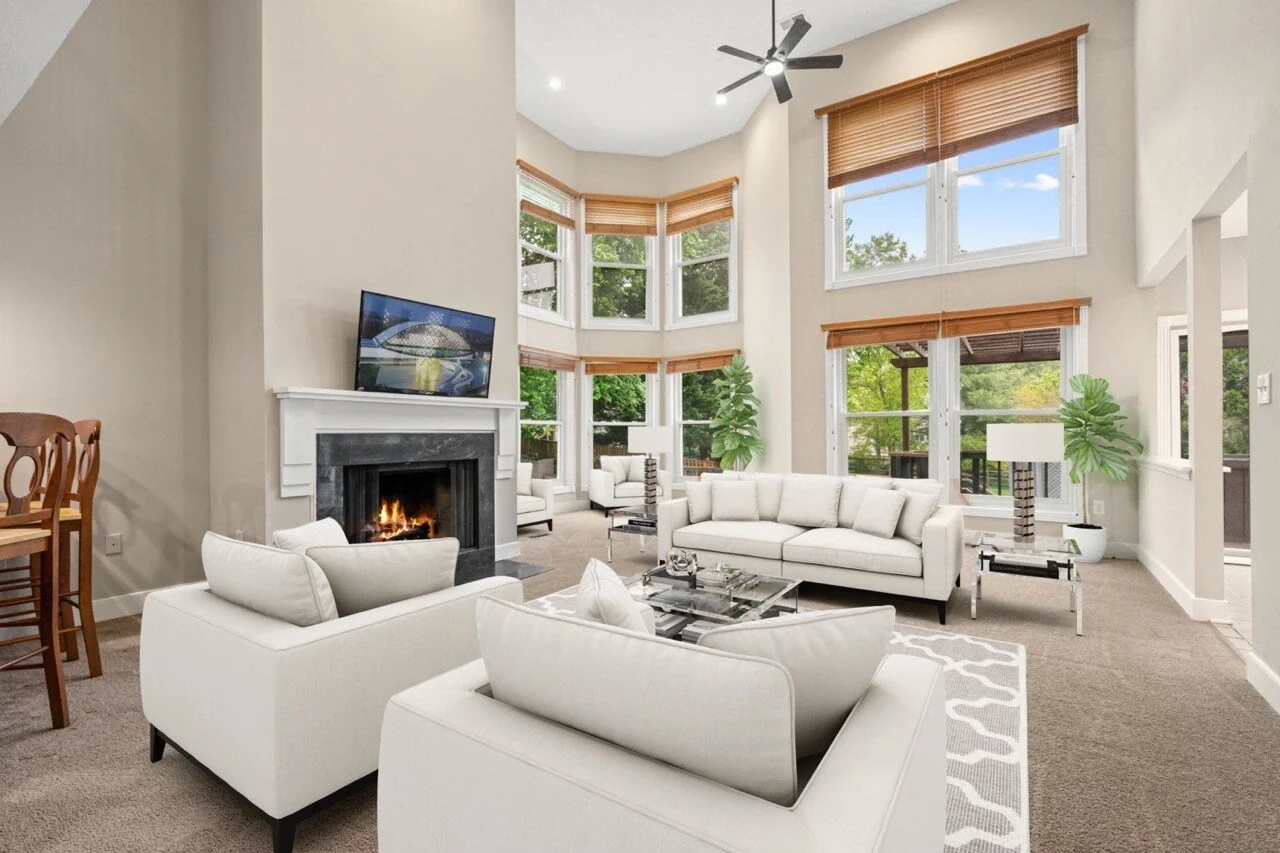
Virtual staging solves the timeline problem. A skilled editor can furnish an empty room digitally — matching the style to the target buyer, whether that’s modern minimalist for a Dupont Circle condo or classic transitional for a family home in Bethesda. The turnaround is fast, the results look polished on screen, and it transforms the way buyers experience the listing photos.
What to do right now: If the home is vacant or sparsely furnished, staging — virtual or traditional — should be near the top of your list. The difference between an empty room and a styled one isn’t cosmetic. It’s the difference between a buyer scrolling past and a buyer scheduling a showing.
Problem #5: Your MLS Listing Isn’t Working Hard Enough
Even with great media, a sloppy MLS listing will quietly sabotage your results. I see these mistakes constantly:
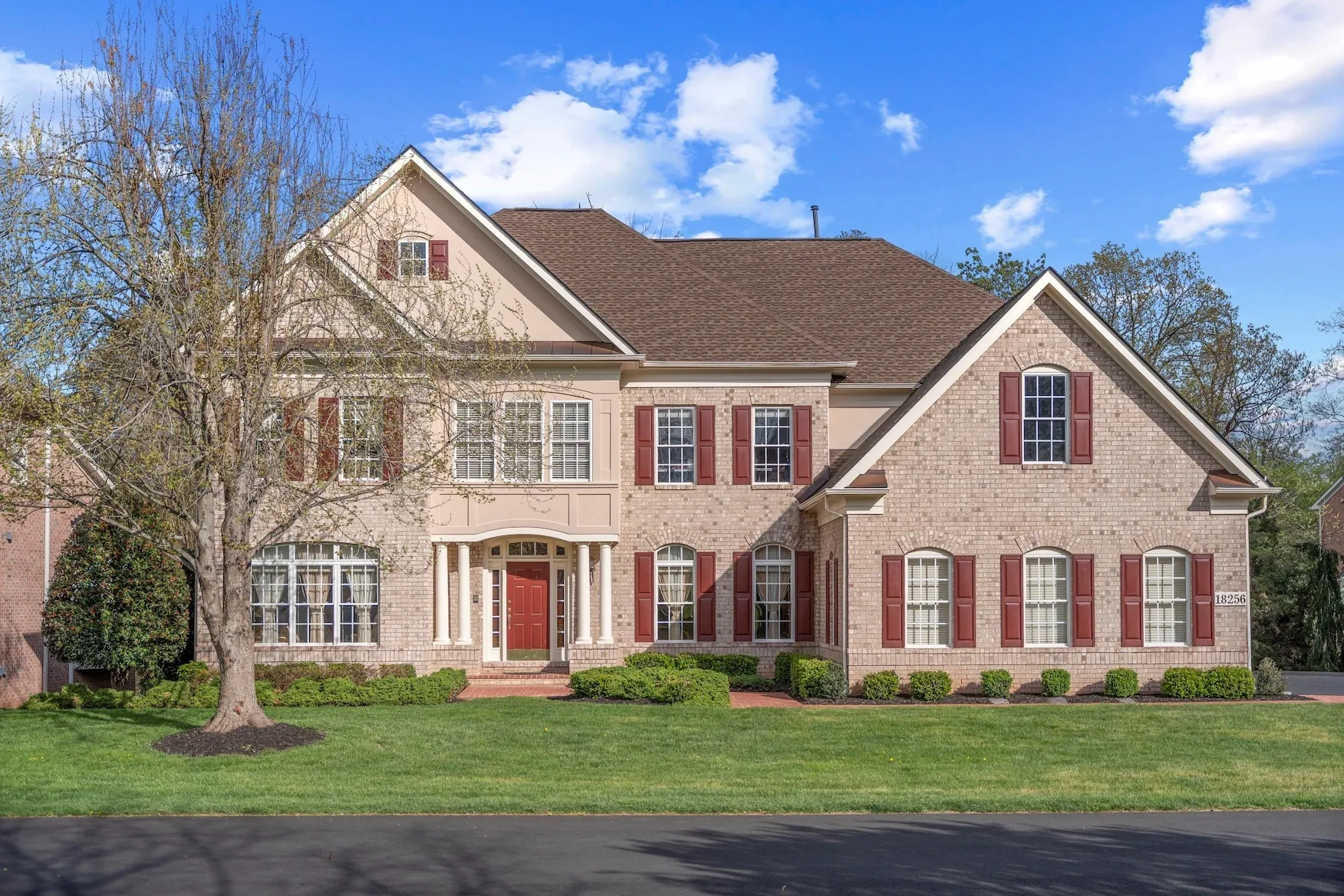
- Wrong photo order. The first image is the thumbnail everywhere — Zillow, Realtor.com, Redfin, social feeds, agent emails. It needs to be your strongest shot. I’ve seen listings where photo #1 is the laundry room. Or the backyard fence. Lead with the hero image — usually the best exterior or the most dramatic interior room.
- Not enough photos. Listings with 20+ photos significantly outperform those with fewer. If you paid for a full shoot, use every image. Don’t leave them sitting in your downloads folder.
- The spec-sheet description. “3BR/2BA, granite counters, stainless appliances” — this tells buyers absolutely nothing they can’t see in photos. Lead with lifestyle: “Morning coffee on the screened porch overlooking a half-acre of mature oaks” paints a picture. Specs don’t.
- Missing data fields. Zillow, Redfin, and other top listing sites use MLS fields to power their search filters. Leave square footage, lot size, HOA fees, or parking blank and your listing might not even show up in filtered results. You’re invisible to buyers who would have been interested.
What to do right now: Pull up your MLS listing and audit it against this list. Reorder photos (best shot first), fill in every single field, and rewrite the description to sell the lifestyle, not the features. This takes 30 minutes and costs zero dollars.
Problem #6: The In-Person Experience Doesn’t Match the Photos
Here’s a scenario I hear about more than you’d think: the listing looks incredible online. Showings are happening. But offers aren’t coming in.
When great marketing generates interest but the property doesn’t deliver in person, the letdown is actually worse than if the photos had been mediocre. Buyers feel misled — even if you didn’t intend it.
The usual culprits:
- Odors. Pet smells, cooking odors, mustiness, cigarette smoke. Sellers are completely nose-blind to their own home. Buyers are not. I’ve walked into shoots where the smell hit me before I set down my camera bag. If I notice it, buyers definitely will.
- Deferred maintenance. A dripping faucet here, a sticking door there, peeling paint on the trim, cracked grout in the bathroom. Individually, each one is minor. Together, they tell buyers, “This home hasn’t been taken care of — what else is hiding?”
- Curb appeal gaps. The front of the home is where online expectations meet reality. Overgrown landscaping, a faded front door, debris on the porch — it sets a negative tone before the buyer even steps inside.
What to do right now: Walk the property like a buyer seeing it for the first time. Better yet, ask a colleague to do it and give you their unfiltered reaction. A $500-$2,000 investment in targeted fixes — fresh paint on the front door, professional deep cleaning, basic landscaping cleanup, a few updated light fixtures — punches way above its weight in buyer perception. Our photo shoot prep checklist →
Problem #7: Not Enough Buyers Are Seeing Your Listing
MLS syndication gets your listing onto the major portals. But syndication is passive distribution, and in a market with hundreds of active listings, passive isn’t enough.
The agents who consistently sell faster aren’t just hoping MLS does the work. They’re pushing the listing out through every channel available:
- Single property websites. A dedicated page for one listing — no competing properties, no sidebar distractions. Just the home, the full media suite, and a clear call to action. These start at just $13 and give you a clean link to share in emails, texts, social posts, and print materials. It’s one of the highest-ROI tools I’ve seen agents use.
- Social media. 87% of Realtors are on Facebook, 62% on Instagram. Listings with professional photos get 37% more saves and shares and 71% higher engagement on social. If you have professional media, you already have the content. You just need to push it out.
- Direct outreach. Email the listing to your buyer agent network with a compelling lead photo and a one-line hook. Many buyer agents filter MLS alerts aggressively — a personal email from you cuts through in a way automated alerts don’t.
- The “coming soon” relaunch. If you’re relisting after a withdrawal, consider running a short “coming soon” campaign with new photos before going active. It builds anticipation and gives the listing a genuine second first impression.
The Relaunch Playbook: How to Turn It Around
If you’ve read this far, you already know what needs to change. Here’s the step-by-step:
Step 1: Diagnose honestly. Is it price, presentation, or both? Pull the showing feedback. Check the online view count. Low views = online presentation problem. High views but low showings = description or photo order issue. Showings but no offers = price or condition.
Step 2: Invest in professional media. This is the single highest-impact move. New professional photos at minimum. For most single-family homes, a package that bundles photos, a floor plan, and a 3D virtual tour gives you a complete online experience — and it’s far more efficient than booking services separately. For luxury or high-stakes listings, go all in with video and drone added to the mix.
Step 3: Stage the home. Whether traditional or virtual, solve the visualization problem — especially if the home is vacant.
Step 4: Optimize the MLS listing. New description, new photo order, every field filled in. Free. Thirty minutes.
Step 5: Push it out. Property website, social media, direct email to buyer agents. Give the listing a second launch, not just a quiet update.
The real cost comparison
Here’s the calculation that changed how I think about stale listings:
| Strategy | Investment | What You Get |
|---|---|---|
| Marketing relaunch (Pro package: photos + floor plan + 3D tour) | $349 | 32% faster sale, 118% more online views, 49% more qualified leads from 3D tour |
| Full marketing relaunch (Luxury package: photos + floor plan + 3D tour + video + drone) | $699 | All of the above, plus 403% more inquiries from video, 68% faster sale from drone |
| One price reduction (3% on a $550K home) | $16,500 | Signals desperation to the market, resets comp values for the neighborhood |
A full-suite marketing relaunch costs about 5% of what a single price reduction costs. And unlike dropping the price, better marketing doesn’t lower the seller’s bottom line — it raises the listing’s ceiling.
Even if you do eventually need a price adjustment, wouldn’t you rather make that call knowing the marketing was already working as hard as it possibly could?
The Bottom Line
A listing that isn’t selling isn’t a failure. It’s a signal — and usually, the signal is pointing at something fixable.
I’ve watched agents turn around listings that had been sitting for months. Not with magic, not with luck, but by going back to the fundamentals: honest pricing, professional media, smart staging, an optimized listing, and proactive marketing. Every one of these moves is backed by real data, and every one of them is something you can put in motion this week.
The agents who consistently sell — even the tough listings, even in slow markets — aren’t doing anything secret. They’re just more intentional about how they present and market their properties. In a world where 97% of buyers start their search online, the quality of your listing’s visual presentation isn’t a nice-to-have. It’s the whole game.
If your listing is sitting right now, don’t wait for the market to come to you. Go back to this checklist. Fix what you can. Reshoot what needs reshooting. And give that property the marketing it deserves.
Umedia provides professional real estate photography, drone, video, 3D virtual tours, virtual staging, floor plans, and property websites across DC, Virginia, and Maryland — all delivered next day. See our packages and pricing → or book a shoot today.