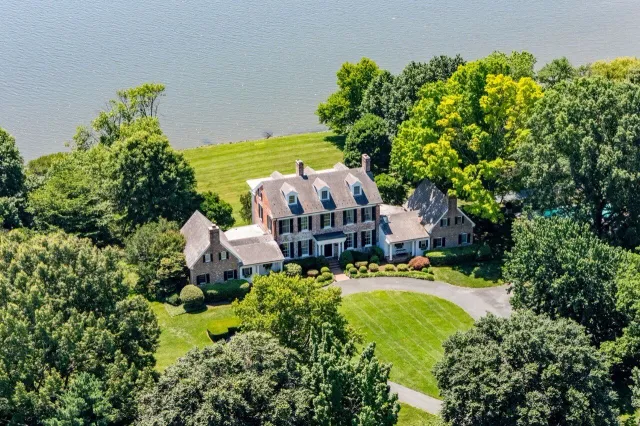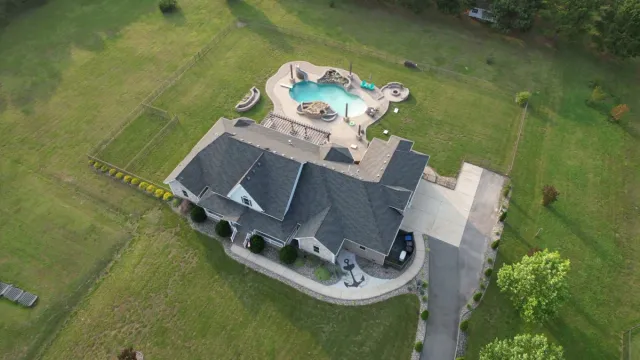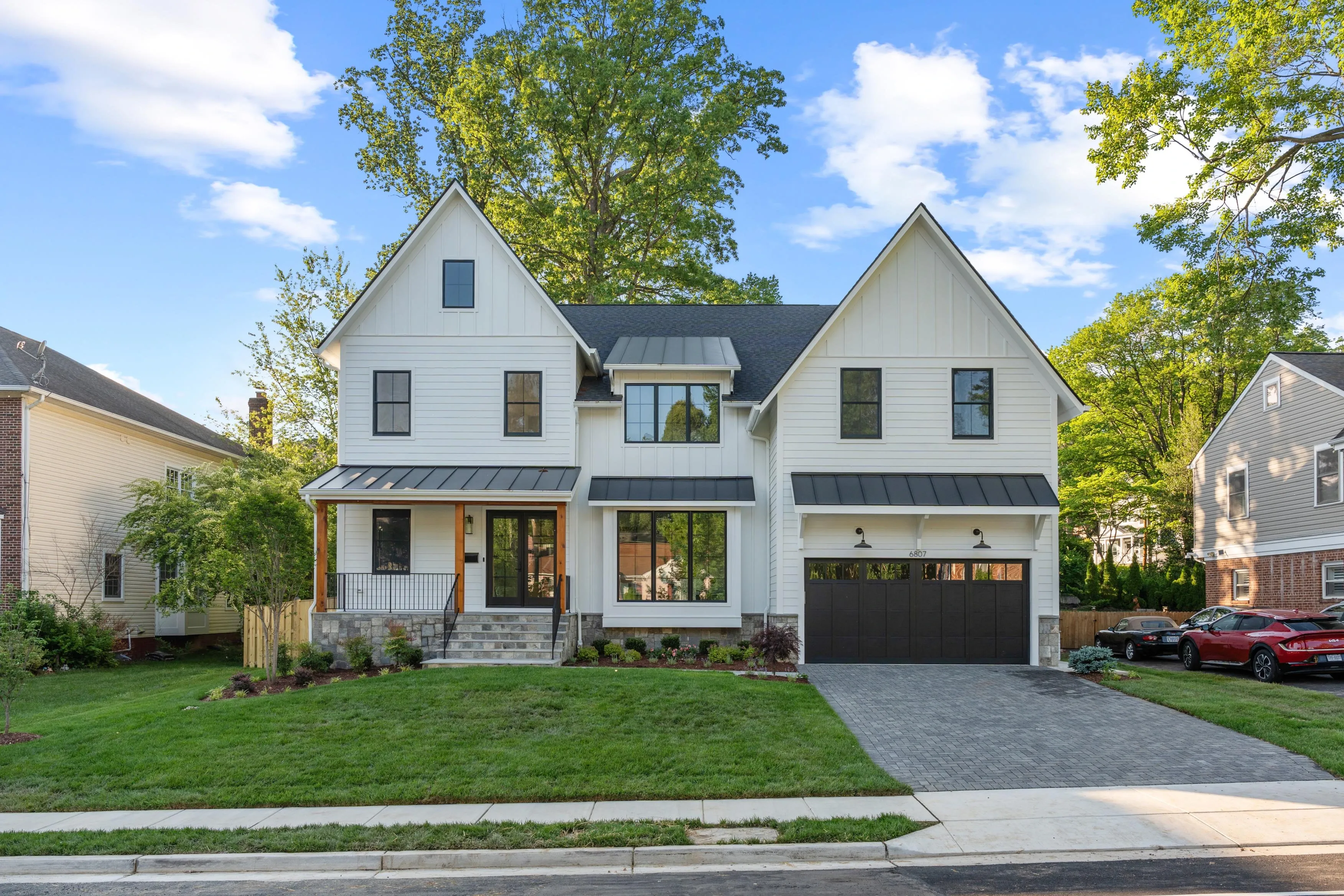
There’s an email no DMV agent enjoys: the compliance notice from BRIGHT with a rule number in the subject line and a $250 line item attached. Almost every one we hear about traces back to photos — a sign in the frame, a missing curbside shot, a recycled image from the last time the house sold.
Here’s the strange part: BRIGHT MLS is the largest MLS in the country — roughly 100,000 subscribers across six states and DC — and yet nobody has ever written a plain-English explainer of its photo rules. The actual requirements live in a policy PDF most agents have never opened. We shoot listings across this market every day, so we read the whole thing — the Images Policy, the MLS Rules, and the published fine schedule — and pulled out everything a listing agent in DC, Maryland, or Northern Virginia actually needs to know.
What Are BRIGHT MLS’s Photo Requirements?
The core requirement is simple: every listing needs at least one exterior photo within 72 hours of submission to BRIGHT, and that photo must be an unbranded curbside view showing the property as a buyer would see it on arrival. Around that sit content rules (no people, no text, no branding), copyright rules (you can’t reuse photos you don’t have rights to), and a disclosure rule for virtual staging. Break them and BRIGHT’s published fine schedule starts at $250.
Here’s the whole rulebook at a glance:
| Rule | What BRIGHT requires | If you break it |
|---|---|---|
| Curbside photo | One unbranded exterior “curbside view” within 72 hours of submission | $250 — “No Photo on Listing” |
| No branding | No signs, logos, superimposed text, or agent/brokerage contact info in any image | $250 — immediate, no warning |
| No people | No identifiable person — “real, animated, computer-generated, or otherwise” | Photo removed; sanction exposure |
| Copyright | Written permission required for any photo you didn’t commission — including prior listings | $250 — “Unauthorized Use of Media” |
| Virtual staging | Must be disclosed in the MLS; only personal property may be added/removed | Photo removed; sanction exposure |
| Timeliness | Listing changes updated within 2 calendar days | $250 — “Untimely Update” |
Everything below unpacks those rows, with the exact policy language where it matters.
What Counts as the “Curbside Photo”?
BRIGHT’s Images Policy, section 3.C, is one sentence: “The exterior photograph must be an unbranded curbside view of the property that shows the property upon arrival.” In other words: stand where the buyer’s car stops, and shoot what they’d see. Not the back deck, not the aerial, not the staged living room — those can all be in the gallery, but the arrival view has to be there, and one photo gets set as the primary.
Four situations are exempt from the photo requirement entirely: office exclusives, coming-soon listings, comp entries, and listings where the seller has requested in writing that images not be publicly disseminated. Everything else — from a Petworth rowhouse to a Loudoun estate — needs the curbside shot.
The 72-hour clock is the detail agents get wrong most often: it runs from submission of the listing to BRIGHT, not from the listing going active. If you enter the listing Thursday and the photographer comes Monday, you’re already out of compliance. This is why we built our workflow around next-day delivery for listing photography — in this market, the media has to be ready before the listing goes in, not after. (BRIGHT separately requires the listing itself to be entered within two calendar days of signatures, so the whole timeline is tighter than most sellers realize.)
What Can’t Be in Your Listing Photos?
BRIGHT’s prohibited-content list (Images Policy §4.A.2) is stricter than most agents assume, and it applies to every image — photos, renderings, and floor plan pages alike:
- No identifiable people. The policy bans “images of any identifiable person — real, animated, computer-generated, or otherwise.” Yes, that includes the AI-generated family your staging vendor added to the porch swing.
- No readable text or superimposed graphics. Nothing added on top of the image — no “STUNNING!” banners, no open-house dates, no phone numbers.
- No brokerage or agent identifying information. Not your face, not your logo, not the listing office. BRIGHT even bans agent portraits from listing media outright.
- No signs or logos. The classic gotcha: your own for-sale sign in the front-yard shot. We routinely clone out or reframe around yard signs specifically because of this rule.
Two things make this list worth taking seriously. First, branded media is one of the few violations BRIGHT fines immediately — $250, no warning, because staff remove the image themselves rather than waiting for you to fix it. Second, the same limits extend to virtual tours, where “in no case may any person included in a virtual tour be identifiable or recognizable.”
A professional shoot handles all of this invisibly: signs reframed or removed, neighbors’ license plates checked, delivery drivers waited out. It’s unglamorous work, and it’s exactly the difference between media that sails through compliance and media that generates the email.
Can You Reuse Photos From an Old Listing?
This is the most expensive misunderstanding in the rulebook, so here’s the exact language. BRIGHT Rule 1.7: “Images (photos and videos) typically are presumed to be owned by the photographer/videographer unless there is a written license or assignment. Subscribers may not use images/documents without express, written permission to submit them to Bright; this includes images from the internet, a photographer, or an existing listing of another Broker.”
Translated: the photographer owns the photos unless a contract says otherwise, and the last agent’s photos are not yours to reuse — even for the same house, even if the seller loved them, even if they’re “right there” in the expired listing. Rule 2.2.2 doubles down: creative content from a prior listing requires written consent from whoever owns the rights. The fine schedule prices the violation at $250, but the real exposure is a copyright claim from the photographer, which BRIGHT’s policy explicitly leaves you holding — when you upload, you warrant to BRIGHT that you have the rights.
What to actually do when you win a re-list:
- If the old photos are genuinely great, track down the copyright holder — usually the photographer, not the previous agent — and get a written license. Verbal is worth nothing under Rule 1.7.
- In most cases, just reshoot. The house has changed, the season has changed, and a full listing package costs a fraction of one price reduction. Fresh media also resets the listing’s look for buyers who saw it the first time — which matters, since a re-list’s biggest enemy is “I’ve seen this one already.”
- Going forward, know what your photographer’s contract says. BRIGHT itself recommends brokers use an assignment clause transferring copyright. However your photographer structures it, the answer to “can I use these on a future re-list?” should be in writing before the shoot, not negotiated after.
Do You Have to Disclose Virtual Staging on BRIGHT?
Yes — and the boundaries of what you’re allowed to edit are tighter than most staging vendors advertise. BRIGHT’s Images Policy §4.E says virtually staged photos and renderings “must be disclosed in the MLS” (in practice, agents note it in the photo caption), and then draws a bright line between two kinds of edits:
| Edit | Allowed? |
|---|---|
| Adding or removing personal property — furniture, mirrors, artwork, plants | ✅ Permitted |
| Virtual staging on to-be-built / under-construction homes | ✅ Permitted |
| Editing in a view “not physically possible from the specified location” | ❌ Strictly prohibited |
| Removing power lines, water towers, or nearby highways | ❌ Strictly prohibited |
The logic is simple: you can change what a seller could change, and you can’t change what they couldn’t. Staging an empty Silver Spring colonial with tasteful virtual furniture? Fine — disclosed. Erasing the transmission lines behind the fence? That’s misrepresentation, and it’s the kind of edit that surfaces at the home inspection with your name on it. Our virtual staging service stays strictly on the legal side of that table — personal property only, nothing structural, nothing outside the lot line.
One more note for 2026: regulators are catching up to AI-altered listing photos — California’s AB 723 became the first state law mandating disclosure of digitally altered images in January. BRIGHT’s current policy already covers the substance through the rules above, but expect this area to keep tightening.
What Does BRIGHT Actually Fine for Photo Violations?
BRIGHT publishes its fine schedule, so there’s no need to guess. The photo-relevant lines:
| Violation | Warning first? | Fine |
|---|---|---|
| Branded media (photos, tours, documents) | No — immediate | $250 |
| No photo on listing | Yes | $250 |
| Unauthorized use of media (copyright) | Yes | $250 |
| Untimely update to listing | Yes | $250 |
| Inaccurate listing information | Yes | $100 |
| Clear Cooperation violation (for scale) | Yes | $5,000 |
The mechanics matter as much as the amounts. Where a warning applies, you typically get 2 calendar days to correct before the fine lands. Repeat offenses re-fine at the same amount — but three sanctions in a calendar year triggers a mandatory hearing, and your broker gets pulled in after more than three administrative fines. Enforcement is increasingly automated: BRIGHT runs listing-data checking software, so “nobody will notice” is not a strategy. A $250 photo fine is survivable; being the agent your managing broker has to attend a hearing for is a worse afternoon.
New Construction, Renderings, and Floor Plans
Three rules that mostly generate good news for builders and their agents:
- Renderings are allowed for new construction — including “the exterior and/or interior of a similar property.” A rendering or plat can stand in as the initial image before the model exists. The prohibited-content list still applies: no people, no text overlays, no builder logos baked into the image.
- Virtual staging is expressly permitted for to-be-built and under-construction homes, covering anything actually conveyed in the sale.
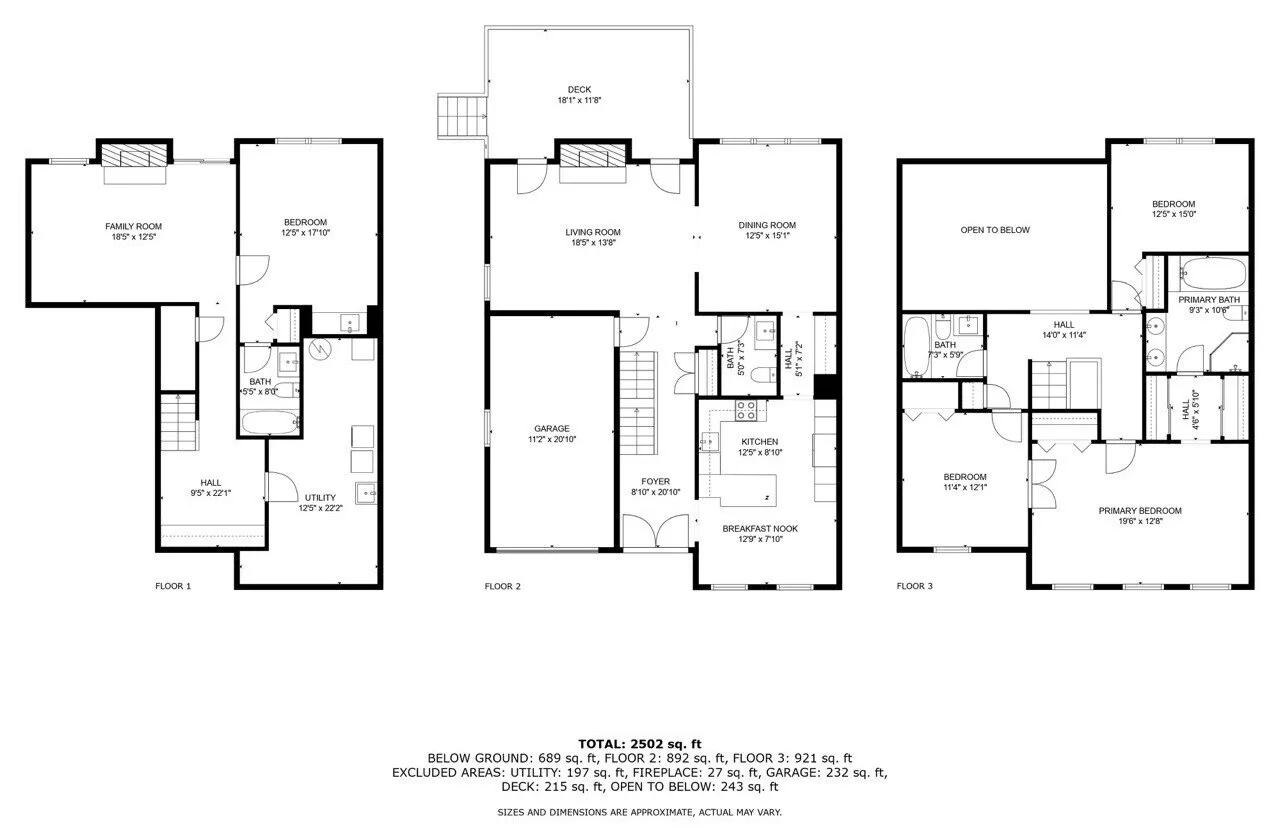
- Floor plans are explicitly welcome, multi-page included. Use that: NAR’s 2024 Profile of Home Buyers and Sellers found 41% of buyers rated photos the most useful feature on listing websites, with floor plans third at 31% — ahead of virtual tours and open houses. A measured floor plan is the cheapest high-impact attachment on the MLS.
For technical specs, BRIGHT’s support documentation allows up to 150 photos per listing and recommends at least 1024×768 pixels. Any professional deliverable clears that bar by a wide margin — we deliver MLS-optimized files sized for BRIGHT alongside full-resolution versions for print and social.
How to Stay Compliant Without Thinking About It
The honest summary of everything above: BRIGHT’s photo rules punish improvisation, not photography. An agent who shoots on a phone, grabs the old listing’s images, or lets the stager get creative with the power lines is exposed on three separate rules at once. An agent whose photographer already builds compliance into the workflow never thinks about any of this.
Here’s the pre-listing checklist we’d give any DMV agent:
- Book media before you enter the listing so the curbside shot exists inside the 72-hour window — see our seller prep guide for getting the house ready.
- Confirm in writing what usage rights you have to every image you upload — especially on re-lists.
- Check the front exterior for signs and people before it goes up; it’s the most commonly flagged image.
- Label virtually staged photos and keep edits to personal property only.
- Order the floor plan — third-most-useful feature to buyers, and BRIGHT explicitly allows multi-page plans.
We build DMV listing media around these rules every day — unbranded, curbside-first, correctly licensed, staged-and-labeled — so the only email you get from BRIGHT is the one confirming your listing is live.