Commercial real estate photography operates on a completely different level than residential. The spaces are larger, the budgets are higher, the decision-makers are different, and the stakes — a multi-year lease or a seven-figure sale — demand marketing materials that match the investment.
Yet many commercial brokers and property owners still rely on smartphone photos or skip professional media entirely. In a market where tenants and investors evaluate properties remotely before scheduling visits, that’s leaving money on the table.
This guide covers what makes commercial photography different, what each property type needs, how to prepare a commercial space for a shoot, and how to use professional media to accelerate leasing and sales.
Why Commercial Properties Need Professional Photography
Longer Sales Cycles Demand Stronger Materials
Residential transactions typically close in 30-60 days. Commercial deals can take 6-12 months or longer. During that extended timeline, your listing photos are working around the clock — appearing in broker searches, investor packages, and tenant presentations. Professional photos maintain credibility throughout the entire sales cycle in ways smartphone images cannot.
Multiple Decision-Makers
Residential buyers are one person or a couple. Commercial decisions involve:
- Business owners or operators evaluating whether the space fits their needs
- Commercial brokers comparing properties for their clients
- Investors and fund managers analyzing properties remotely
- Architects and designers assessing renovation potential
- Lenders reviewing collateral for financing
Each audience needs to see the property clearly, accurately, and professionally. One set of high-quality photos serves all of them.
Higher Price Points Justify Higher Marketing Investment
A $500/month residential listing might not justify a $1,500 media package. But a $15,000/month commercial lease or a $3M property sale absolutely does. Professional photography represents a fraction of one month’s rent or a tiny percentage of the transaction value — and it directly impacts how quickly that space gets leased or sold.
Photography Requirements by Property Type
Office Spaces
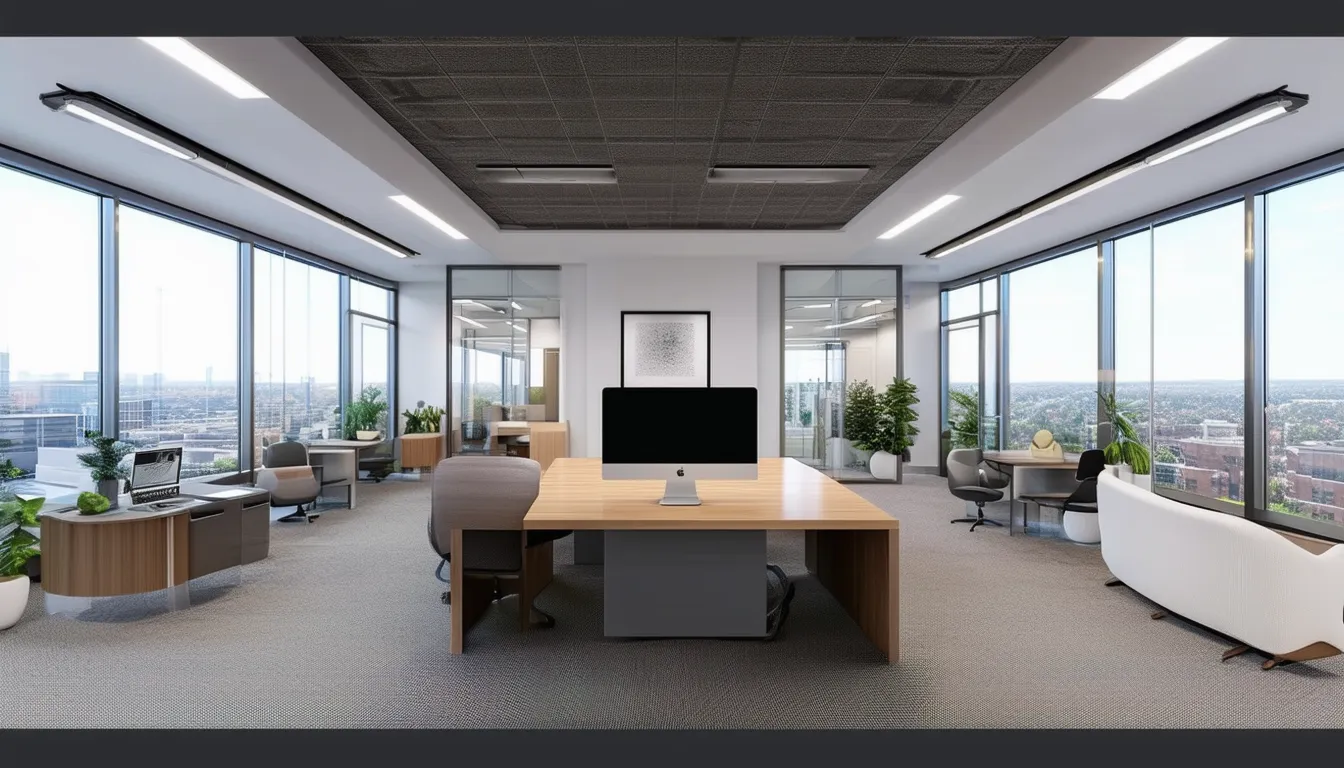
Office photography needs to convey productivity, professionalism, and comfort — the qualities tenants want their employees to experience.
Essential shots:
- Reception and lobby areas (first impression matters)
- Open floor plan showing overall layout and capacity
- Private offices and conference rooms
- Break room and kitchen facilities
- Restrooms (if recently renovated or above standard)
- Server room or IT infrastructure (for tech tenants)
- Building common areas — lobby, elevator bank, shared conference rooms
- Parking structure or lot
- Building exterior from multiple angles
- View from windows (especially for upper-floor suites)
Styling tips:
- Remove personal items from desks if currently occupied
- Ensure all lights are on and working
- Clean all glass surfaces — offices have a lot of glass
- If the space is vacant, consider virtual staging to show potential layouts
Retail Spaces
Retail photography emphasizes visibility, foot traffic, and customer experience.
Essential shots:
- Storefront and signage from pedestrian perspective
- Street-level context showing neighboring businesses and foot traffic
- Full interior showing floor layout and ceiling height
- Display areas, shelving, and merchandising zones
- Storage and back-of-house areas
- Loading dock or delivery access
- Parking lot from customer arrival perspective
- Aerial shot showing location within shopping center or streetscape
For vacant retail:
- Wide shots emphasizing square footage and open layout
- Measurements visible in photos or accompanying floor plans
- HVAC, electrical, and plumbing access points documented
- Virtual staging showing the space as a functioning retail operation
Restaurants and Food Service
Restaurant photography is the most complex commercial property type because you’re selling both the business infrastructure and the dining experience.
Dining room and bar:
- Full room shot with tables set, chairs pushed in, ambient lighting on
- Bar area styled with glassware and bottles displayed
- Private dining rooms or event spaces
- Outdoor seating fully furnished and styled
- Architectural or design details (exposed brick, custom lighting, art)
Kitchen and operations:
- Full kitchen showing equipment layout and workflow
- Walk-in cooler and storage areas
- Prep areas and stations
- Hood system and ventilation
- Dish pit and three-compartment sink
Exterior and context:
- Storefront with signage clearly visible
- Patio or sidewalk seating
- Parking and valet area
- Delivery access
- Neighborhood context showing foot traffic potential
Timing: shoot during off-hours but with the space fully styled as if service is about to begin. Ambient lighting, candles lit, napkins folded, glassware polished.
Industrial and Warehouse
Industrial photography prioritizes functionality, capacity, and logistics access.
Essential shots:
- Full warehouse floor from elevated position (showing clear height and open space)
- Loading docks — number, height, and approach
- Drive-in doors with trucks or clearance visible
- Office space within the industrial building
- Electrical panels and power infrastructure
- Yard area and truck staging
- Crane systems or specialized equipment (if included)
- Fencing, security, and access points
- Drone aerial showing lot utilization, truck access, and proximity to highways
Multi-Family and Apartment Buildings
Multi-family photography markets both the building and the lifestyle.
Building-level shots:
- Exterior from multiple angles showing the full building
- Lobby and common areas
- Amenity spaces — pool, gym, business center, rooftop, lounge
- Parking garage
- Landscaping and outdoor spaces
- Drone aerial showing the property in its neighborhood context
Unit-level shots:
- Model unit or representative unit photographed like a residential listing
- Kitchen, living room, bedrooms, bathrooms
- Views from units at different levels
- In-unit amenities (washer/dryer, balcony, smart features)
For investors: include photos that document building systems — boiler room, electrical panels, roof condition, common area maintenance status. These aren’t marketing photos but they support due diligence.
Land and Development Sites
Undeveloped land is the hardest commercial property to photograph compellingly.
What works:
- Drone photography is essentially required — ground-level photos of empty land are uninspiring
- Aerial shots showing property boundaries, topography, and access roads
- Context shots showing proximity to highways, utilities, and neighboring development
- Seasonal shots if the land’s character changes (cleared vs. wooded, dry vs. wet)
- Overlay graphics showing zoning boundaries or planned development footprint
Preparing a Commercial Space for Photography
General Preparation
- Deep clean everything — commercial spaces accumulate dust and grime in ways that show up clearly in professional photos
- Turn on all lights and replace burned-out bulbs. Mixed color temperatures (warm and cool bulbs in the same space) look unprofessional
- Remove clutter from surfaces, floors, and storage areas
- Clean all windows inside and out — natural light is a selling point
- Stage conference rooms with clean whiteboards, organized cables, and chairs pushed in
- Hide personal items — coffee mugs, lunch bags, jackets on chairs
For Occupied Spaces
If the property is currently in use:
- Coordinate with the current tenant for off-hours access
- Ask tenants to declutter their spaces and desks the day before
- Remove proprietary information visible on screens, whiteboards, or walls
- Consider shooting on a weekend when the space is empty but still furnished
For Vacant Spaces
Empty commercial spaces photograph poorly. Options:
- Virtual staging to show the space furnished and operational
- Virtual furniture removal isn’t needed, but adding furniture digitally transforms empty rooms
- Signage and branding removal — if the previous tenant’s signage is still up, discuss with the photographer whether it should be removed or digitally edited
How Much Does Commercial Photography Cost?
| Property Type | Typical Cost | What’s Included |
|---|---|---|
| Small office/retail (under 3,000 sq ft) | $300-$500 | 25-40 photos, interior/exterior |
| Mid-size commercial (3,000-10,000 sq ft) | $500-$800 | 40-60 photos, multiple areas |
| Large commercial (10,000+ sq ft) | $800-$1,500 | 60-100+ photos, comprehensive coverage |
| Restaurant | $500-$1,000 | Dining room, kitchen, bar, exterior |
| Industrial/warehouse | $400-$800 | Interior, loading docks, yard, drone |
| Multi-building/campus | $1,000-$2,500 | Full coverage of all structures and grounds |
These are typical industry-wide ranges. In the DMV, Umedia’s square-footage-based commercial packages start at $249 (Essentials) and $349 (Pro Marketing, which adds a Matterport 3D tour and branded property website).
Add-On Services
| Service | Cost | Value |
|---|---|---|
| Drone/aerial photography | $150-$350 | Essential for site context and parking |
| 3D virtual tour (Matterport) | $300-$800 | Remote viewing for out-of-market prospects |
| Video walkthrough | $500-$1,500 | Compelling for marketing and presentations |
| Floor plans | $150-$400 | Critical for tenant space planning |
| Virtual staging | $25-$75/image | Transform vacant spaces |
Using Commercial Media Effectively
Listing Platforms
- Upload the highest resolution images allowed by CoStar, LoopNet, Crexi, and other commercial platforms
- Lead with the strongest exterior shot and the most impressive interior space
- Include drone aerials early in the photo sequence — commercial buyers want to see site context immediately
- Add floor plans as supplementary documents
Broker Presentations
- Create a dedicated property deck with professional photos, floor plans, and aerials
- Include a 3D virtual tour link for remote viewing
- Embed video walkthroughs in digital presentations
- Provide a single property website as a shareable link with all media in one place
Investor Packages
- Professional photos add credibility to offering memorandums and investment summaries
- Drone aerials showing the property in its market context support location analysis
- Include building system documentation photos for due diligence
- 3D tours let investors evaluate remotely before committing to site visits
Commercial Photography Is a Business Investment
For commercial real estate, professional photography isn’t a marketing expense — it’s a deal acceleration tool. Better photos lead to more inquiries, faster tours, and shorter vacancy periods. In a market where one month of vacancy on a $15,000/month space costs $15,000, investing $500-$1,500 in professional media is a decision that pays for itself almost immediately.
Ready to market your commercial property professionally? Explore Umedia’s commercial property media services or request a quote.