The condo shoot that goes wrong rarely goes wrong at the camera. It goes wrong at the front desk: the concierge has no record of the appointment, management wants a certificate of insurance nobody requested, the rooftop deck is booked for a resident’s party, and the elevator you need is padded for a move-in.
High-rise listings in Rosslyn, Ballston, Clarendon, Crystal City, and downtown Bethesda are some of the most straightforward homes in the DMV to photograph — and some of the most logistically fussy to get into. Add the fact that both Arlington and Bethesda sit inside the DC no-drone zone, and the usual “let’s get an aerial of the building” plan is off the table before it starts.
This is the agent’s playbook for condo photography in Arlington and Bethesda: what to sort out with the building before shoot day, how to handle amenities and views, and what to shoot instead of a drone.
What Do You Need to Arrange Before a High-Rise Condo Shoot?
Three things, ideally on the day you book: building access (the front desk or management knows who’s coming and when), a certificate of insurance if the building asks for one, and permission to photograph shared amenities if you want them in the listing. Each takes a two-minute email when you start early and can cost you the shoot when you don’t.
Every building runs its own playbook, so treat this as a checklist of questions to ask management, not a list of rules that apply everywhere:
- Who needs to be told, and how? Some buildings just want the photographer’s name at the front desk; others want an email to management or a vendor form a day or more ahead.
- Is a COI required? If yes, get the exact certificate-holder name and any wording requirements in writing (more on this below).
- Which elevator and entrance? A photographer carries cases, a tripod, and lights — not furniture — but some buildings still route all vendors through a service elevator or loading dock with set hours.
- Parking. Garage visitor spaces in Ballston or Bethesda Row are rarely free and rarely plentiful. Tell your photographer where to park, or budget the time to find street parking.
- Amenity access. Rooftop decks, pools, gyms, lounges, and party rooms are almost always managed separately from the unit. Ask whether photography is allowed and when the spaces are quietest.
- Lockbox or escort? If the unit is vacant, confirm how the photographer gets the key and whether a staff escort is required in common areas.
It’s easy to know a unit inside out and never read the building’s vendor rules, because nobody needed them until the photographer showed up with a tripod. Ask once, keep the answers in your listing file, and every later vendor visit — stager, cleaner, inspector — goes smoother too.
What Is a COI, and Why Does the Condo Building Want One?
A certificate of insurance (COI) is a short document, issued by a vendor’s insurance agent, showing that the vendor carries liability coverage. Condo associations and management companies ask for them because a vendor working in common areas — hallways, elevators, the rooftop — is a liability exposure for the building, and the COI is proof that someone other than the association would be on the hook if something got damaged.
Here’s what agents should know about how it works in general practice:
- The building sets the requirements, not the vendor. Required coverage types and limits vary by building and are usually set by the association’s own insurance advisor. We won’t guess at a number for your building — ask management for their written requirements.
- Many buildings want to be named on the certificate. Condo insurance professionals commonly advise that certificates list as additional insureds “the co-op or condo association, the managing agent,” and the unit owner when work happens inside a unit (CooperatorNews). Get the exact legal names, because “The Rosslyn Tower” and “Rosslyn Tower Condominium Unit Owners Association” are not the same thing on paper.
- The certificate should come from the vendor’s insurance agent. The same CooperatorNews piece quotes industry advice to get the COI from the contractor’s agent with the building named as certificate holder, rather than a copy handed over by the vendor.
- It takes time to issue. A COI naming a specific building is a custom document. Some insurance agents produce them same day; others take longer. That’s why the request belongs at booking, not the morning of the shoot.
What to send any vendor the building requires a COI from: the building’s legal name and address, the management company’s legal name, the requirements document (or the property manager’s email), who should receive the COI, and the deadline. Then ask the vendor to have their insurer issue the COI naming the association and managing agent, and confirm before booking that the vendor can meet the building’s requirements.
How Should You Photograph Condo Building Amenities?
Photograph them only with management’s permission, only when they’re empty, and only the ones buyers care about. For many Arlington and Bethesda condos, the rooftop pool, fitness center, and resident lounge are a real part of what the buyer is paying for — the photos need to show them. But amenities are shared property, and the rules for photographing them are the building’s, not yours.
The rules that apply no matter which building you’re in:
- No identifiable people. BRIGHT MLS bans “images of any identifiable person — real, animated, computer-generated, or otherwise,” and the rule extends to virtual tours: “in no case may any person included in a virtual tour be identifiable or recognizable” (see our breakdown of BRIGHT MLS photo rules). A rooftop deck on a Saturday afternoon is a non-starter; the same deck at 9 a.m. on a Tuesday is usually empty.
- Mind the signage. BRIGHT’s prohibited-content list also includes signs and logos, and posted notices and resident bulletin boards are clutter anyway. Framing around them is part of the job.
- Ask about existing building photos. Some management companies keep professional amenity photos for their own marketing. Using them in your listing requires the copyright owner’s written permission under BRIGHT’s rules — ask, don’t assume.
Then pick the amenities that sell. A 24-hour concierge is better stated in the listing remarks than photographed. A rooftop pool with a monument view is worth the scheduling effort. A gym photo matters more to a buyer in a building without a nearby fitness club than to one around the corner from three.
How Do You Get the View Shot in a High-Rise Condo?
The view is an exposure problem first: a bright skyline outside and a much darker room inside. A camera can’t hold both in one frame, so we blend several exposures — or use flash — so the room reads naturally and the skyline doesn’t blow out to white. That’s the core technique behind HDR real estate photography, and it’s why phone photos of high-rise units almost always show either a dark room or a white window.
Beyond technique, the view shot is mostly about planning:
- Match the shoot time to the exposure. A west-facing unit can look best late in the day; an east-facing unit in the morning. Tell your photographer which way the main windows face when you book.
- Clean the glass — inside and out, if you can. Streaks and water spots show up dramatically in a backlit window. Exterior glass on a high floor is the building’s job; ask management when windows were last washed.
- Open everything. Blinds fully up, sheers pulled back, balcony doors cleaned. A half-lowered shade cuts the view in half.
- Consider twilight. If the unit looks out over Rosslyn’s skyline, the Potomac toward Georgetown, or the lights of downtown Bethesda, a dusk photo with the city lit up is often the strongest hero image the listing will have. A real twilight shoot is $199 with us; a virtual twilight edit on a daytime exterior is $15 per photo.
- Shoot the balcony as its own room. In a condo, the balcony is part of the living space. Two chairs, a small table, and nothing else.
Why Can’t You Fly a Drone at an Arlington or Bethesda Condo?
Because both are inside the DC Flight Restricted Zone (FRZ) — a ring of roughly 13–15 nautical miles around Reagan National that the FAA treats as national defense airspace. Drones need joint FAA/TSA authorization to fly there, and the FAA states that promotional requests, including marketing photos and virtual tours, are “not routinely authorized” (FAA DC airspace page).
That applies to every operator — us, any other photographer, and the seller’s nephew with a drone. Civil penalties for unauthorized flights reach up to $75,000 per violation under the 2024 FAA Reauthorization Act, and knowingly violating national defense airspace is a federal crime under 49 U.S.C. § 46307 (LegalClarity). Even Zillow’s drone-based SkyTour feature notes that availability depends on “airspace restrictions” (Zillow).
We walk through exactly where the FRZ line falls in can you fly a drone at your DC listing? For condo listings in Rosslyn, Ballston, Courthouse, Crystal City, Pentagon City, downtown Bethesda, and Friendship Heights, the answer is simply no — and a photographer who offers otherwise is a liability, not a perk.
What Can You Shoot Instead of a Drone Aerial?
You can recover most of what an aerial would show — the building’s scale, its setting, the neighborhood, and the view — without leaving the ground or breaking federal airspace rules. For a high-rise condo, the “aerial” often comes from the building itself.
| What a drone would have shown | No-drone alternative | What to arrange |
|---|---|---|
| The view from height | Shoot from the unit’s windows and balcony; add the rooftop deck if there is one | Rooftop access permission from management |
| The building and its setting | A wide, vertically corrected ground-level exterior of the tower, often from across the street | Clear sightline; shoot when the facade is in good light |
| A dramatic hero image | Twilight exterior or twilight view from the unit | A dusk appointment; or virtual twilight on a day shot |
| The neighborhood | Neighborhood photography ($119 with us): Metro entrance, Bethesda Row, Clarendon’s restaurant strip, nearby parks | Nothing — public streets |
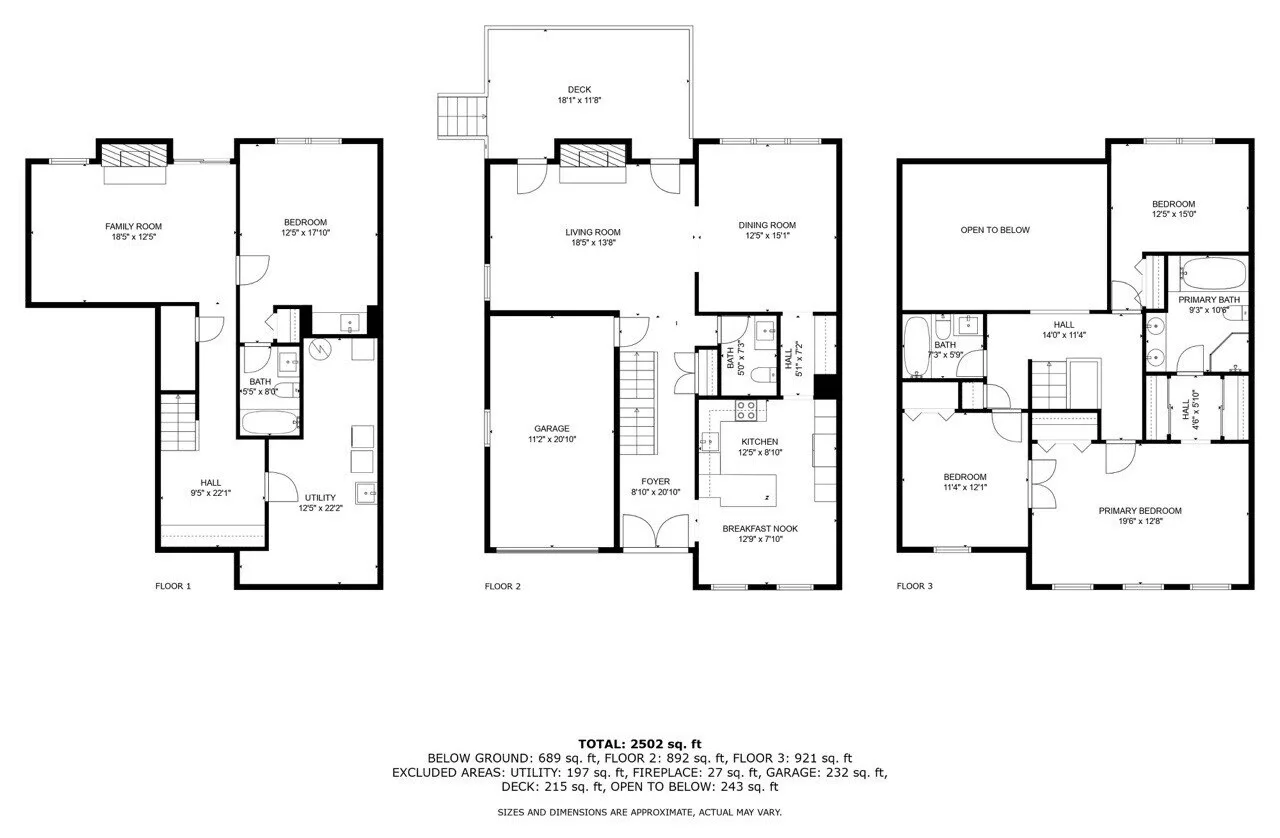
| How the unit sits in the building | A floor plan with the balcony and window walls clearly marked | Nothing beyond the floor plan scan |
A few elevated-angle options that work well for condos:
- Rooftop terraces and amenity decks. The single best “aerial” for most high-rises. Ask management in advance; many buildings allow it at quiet hours.
- Upper-floor common areas. A corridor window or sky lounge on a higher floor can give a broader view than the unit itself. Again: permission first.
- The unit’s own balcony. Looking down the street gives context — the Metro entrance, the park across the road — that a straight-ahead view doesn’t.
The honest framing: buyers of an Arlington one-bedroom are not deciding based on a photo of the roof. They want to know what the unit looks like, what they’ll see out the window, how the layout works, and what’s within walking distance. Every item on that list can be shot from the ground.
Why Does a Condo Listing Need a Floor Plan?
Because layout is the one question condo buyers can’t answer from photos — and they want it answered. In NAR’s 2025 Profile of Home Buyers and Sellers, 57% of buyers who searched online rated floor plans “very useful,” and 81% said the same of photos (NAR 2025 Profile). UK portal Rightmove found listings with floor plans got 52% more click-throughs (CubiCasa).
In a high-rise, the floor plan does a few jobs photos can’t:
- Shows how rooms connect. A one-bedroom-plus-den reads very differently when you can see the den has no window.
- Marks the window walls and balcony. Combined with your remarks on which way the unit faces, it tells buyers where the light comes from.
- Answers furniture questions. Will a king bed and two nightstands fit? Room dimensions on the plan settle it before a showing.
Two notes on square footage. Floor-plan square footage is approximate and isn’t meant for valuation. The square footage you market should come from your usual source of record, and if the floor plan total and that number differ, flag it to your seller before buyers do. A 2D floor plan is $149–$169 with us, and it’s included in the Essentials and Pro Marketing packages.
Should You Add a 3D Tour to a Condo Listing?
For condos with views, unusual layouts, or out-of-area buyers, yes. A 3D tour lets a relocating buyer walk the unit, stand at the window, and see how the kitchen opens to the living room — from their laptop, before they ever ask the concierge for a showing. Zillow has reported that homes with a 3D Home tour sold 14% faster and got 37% more views (Zillow).
Which tour depends on where you want it to show up:
- Matterport 3D tour (from $199) — works in the BRIGHT MLS virtual-tour field, on your brokerage site, and on property websites. No longer displayed on Zillow since October 2025.
- Zillow 3D Home tour ($199–$299, including an interactive floor plan) — the tour that shows on Zillow and the one Zillow Showcase is built around.
One condo-specific caution: if the tour includes the hallway, lobby, or amenities, those are common areas. Same rules as photos — management’s permission, and no identifiable residents anywhere in the scan.
Condo Listing Photo Prep: The Unit Checklist
Most standard home-prep advice applies to condos, plus a few things specific to high-rise living:
- Clear the counters completely. Small kitchens look smaller with a toaster, coffee maker, and knife block on the only stretch of counter.
- Strip the fridge front and entry area. Mail, parking tags, and building notices with names or unit numbers on them are privacy issues and visual clutter.
- Hide the unit number. Photograph the door, not the number on it.
- Edit the balcony. Remove bikes, storage bins, and the dead plant. Two chairs and a small table is plenty.
- All lights on, matching bulbs. Mixed warm and cool bulbs show up as odd color casts, especially in a room with a big bright window.
- Window coverings fully open. Unless the view is a brick wall three feet away — then sheers down is the right call.
- Book the elevator and parking. Not a photo tip, but the most common reason a condo shoot starts late.
How to Book an Arlington or Bethesda Condo Shoot
Send three things with your booking — the building’s access rules (elevator, parking), the direction the main windows face, and whether you want amenities included — and the shoot runs like any other. If the building requires a COI from vendors, confirm with whichever photographer you hire that they can meet those requirements before shoot day. Most condo listings fit our Essentials package (unlimited HDR photos, 2D floor plan, and virtual twilight, from $249 up to 1,500 sq ft) or Pro Marketing (adds a Matterport 3D tour and property website, from $349). Both are on our pricing page.
For neighborhood-specific details, see our pages on Arlington, VA real estate photography and Bethesda, MD real estate photography. And if the listing is a single-family home in Reston, Ashburn, or Gaithersburg instead — outside the FRZ — the aerial conversation starts over, with a licensed pilot and a very different shot list.