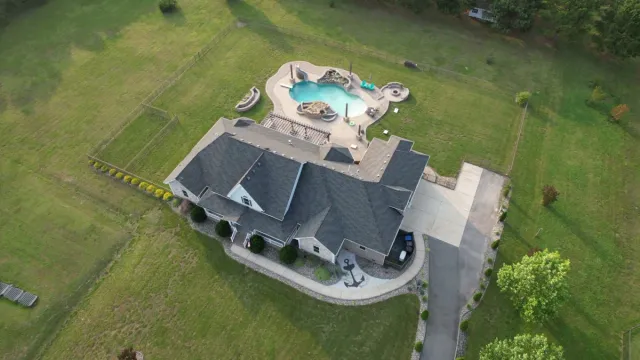
You won the re-list. The house didn’t sell eight months ago with another agent, the seller is ready to try again, and the old listing photos are still sitting there on BRIGHT and on Zillow. They’re decent. The seller even emailed you a folder of them. Can you just upload those?
Almost always, no, not without written permission from whoever owns the copyright, and that’s usually the photographer, not the previous agent and not the seller. BRIGHT MLS writes that presumption straight into its rules and puts a $250 fine on getting it wrong. Copyright law adds exposure well beyond that.
This post covers the reuse question in detail: who actually owns listing photos, what BRIGHT’s rules say word for word, the common re-list scenarios, and what to ask any photographer before the shoot so you’re never stuck. It’s general information from a team that shoots listings across DC, Maryland, and Northern Virginia, not legal advice. For a specific situation, talk to your managing broker or a real estate or intellectual-property attorney.
Can You Reuse Old Listing Photos on BRIGHT MLS?
Only with express, written permission from the owner of the photos. BRIGHT MLS Rule 1.7 says photos and videos “typically are presumed to be owned by the photographer/videographer unless there is a written license or assignment,” and that subscribers may not use images without written permission. That explicitly “includes images from the internet, a photographer, or an existing listing of another Broker.”
Two more provisions close the obvious loopholes:
- Rule 2.2.2 bars using “creative, non-factual property listing content (e.g., images, descriptive text, and documents) from a prior listing of a property without the written consent of the owner of the proprietary rights.” Note that this covers your listing remarks too, not just photos.
- Images Policy §3.F (BRIGHT’s Policy on Images and Documents) repeats the rule for “photographs, images, graphics, audio and video recordings, virtual tours, drawings, remarks, document attachments, and narratives.” Old video and 3D tours are covered as well.
The quick reference:
| You want to reuse… | Allowed on BRIGHT? | What you need |
|---|---|---|
| Photos you took yourself | Usually yes | Check your brokerage agreement; it may assign rights to your broker |
| Photos you commissioned, same listing | Yes, within your license | The written license or assignment |
| Photos you commissioned, for a later re-list | Only if your license covers it | Check the license term; otherwise get written permission |
| Another agent’s photos from a prior listing | No, by default | Written permission from the rights owner (usually the photographer) |
| Photos the seller emails you from the last sale | No, by default | The seller rarely owns them; get permission from the rights owner |
| Images from Zillow, Google, or a portal | No | Don’t |
Who Owns Real Estate Listing Photos?
The person who pressed the shutter, unless a written agreement says otherwise. The US Copyright Office’s Copyright Basics (Circular 1) says copyright “initially belongs to the author(s) who created that work,” and protection is automatic from the moment the photo exists. No registration, watermark, or © notice is needed for the photographer to own it.
Three facts from the same circular explain most of the confusion in our industry:
- Paying for the shoot doesn’t transfer ownership by itself. A transfer of copyright “generally must be made in writing and signed by the owner of the rights conveyed.”
- Having the files isn’t owning the photos. The Copyright Office: “Mere ownership of a copy… does not give the owner of that copy… the ownership of the copyright in the work.” A seller with a Dropbox folder of the old listing photos has copies, not rights.
- “Work made for hire” is narrower than people think. It covers employees working within their regular duties, or a commissioned work that fits one of nine statutory categories and is backed by a written work-for-hire agreement. An independent photographer you book for a listing is not your employee. If your contract relies on work-for-hire language, have your broker or an attorney confirm it actually applies.
So who ends up owning what depends on the paperwork. NAR’s legal guide, How to Manage and Protect Listing Content, puts the two main options well: “An assignment is similar to the sale of a home, while a license is similar to a lease.” Under an assignment, the photographer sells you (or your broker) the copyright. Under a license, they keep it and rent you specific uses, for a specific scope and sometimes a specific period.
One more twist: if you shoot your own photos, your independent contractor agreement with your brokerage may assign that content to the broker. NAR’s guide gives exactly that example (“Broker owns the content. Agent no longer has rights to the content.”), noting the broker may license it back. Agents who change firms should check this before taking a photo library with them.
Why BRIGHT Requires Permission in Writing
Here’s a detail most agents miss. Under general copyright law, a non-exclusive license doesn’t have to be written down; Circular 1 says transferring a right on a nonexclusive basis “does not require a written agreement.” BRIGHT’s rule is stricter. Rule 1.7 requires express, written permission, so a verbal “sure, go ahead” from the last photographer won’t protect you in a BRIGHT compliance review.
There’s a second reason it matters. Section 2 of BRIGHT’s Images Policy quotes the Bright Subscription Agreement every subscriber signs: for any listing content uploaded, the subscriber “represents and warrants” that they own the copyright or have obtained the necessary consents, and grants BRIGHT “a non-exclusive, perpetual, worldwide, transferable, royalty-free license” to use, reproduce, display, and sublicense that content through the Bright MLS Service.
Read that carefully. Every time you upload a photo, you are promising BRIGHT you had the right to grant a perpetual, sublicensable license. If your photographer’s license only covered “MLS display for the term of the listing,” it’s worth asking your broker whether that’s broad enough. This is why BRIGHT’s own Images Policy suggests a clause like this in every photographer agreement:
“Photographer assigns all right, title, and interest, including copyrights and all intellectual property rights, in photographs to the broker and agrees to execute any further documents which may reasonably be necessary to effect this assignment.”
You don’t have to use that exact language, and some photographers won’t assign copyright outright. But it shows what BRIGHT considers the clean version.
What Happens If You Reuse Photos Without Permission?
On the MLS side, it’s manageable. BRIGHT’s fine schedule lists “Unauthorized Use of Media – Copyright” at $250. It’s a warning-first violation, so in most circumstances you get 2 calendar days to correct before the fine. BRIGHT can also remove non-conforming images (Images Policy §3.G), which, on an active listing, means your gallery can shrink mid-marketing.
Off the MLS, the exposure is larger. If the photographer sues, federal copyright law lets a copyright owner elect statutory damages of $750 to $30,000 per work, up to $150,000 per work for willful infringement (17 U.S.C. § 504(c)). Per work means per photo. Whether statutory damages are available depends partly on when the photos were registered with the Copyright Office (17 U.S.C. § 412), so the real number in any dispute varies widely. That’s a question for an attorney, not a blog post. The point for agents is that the downside of a recycled 30-photo gallery is not “a $250 fine.”
Photographers do enforce these rights. The best-known example in our industry is VHT, Inc. v. Zillow Group. The Copyright Office’s fair use case summary describes VHT as “the largest professional real estate photography studio in the U.S.” It sued Zillow over its use of VHT listing photos, including on Zillow’s “Digs” home-design pages, and in 2019 the Ninth Circuit agreed that the Digs use was not fair use. NAR’s write-up, Who Owns Your Property Photos?, points out that VHT granted brokers only non-exclusive licenses, and advises agents to “maintain records of all photography agreements.”
The Common Re-List Scenarios, Answered
“The house expired with another agent and I’m relisting it.” The old photos belong to someone else, usually the previous agent’s photographer. You need written permission from the rights owner, and the previous agent may not be able to grant it. In practice, reshooting is usually simpler. The seasons have usually changed too: a Bethesda colonial photographed in June looks wrong on a January relaunch, and buyers who scrolled past it once need a reason to look again.
“It’s my own expired listing, and I’m relisting it after a break.” Read your photographer’s license. If it covers the property with no expiration, or covers future listings of the same property, you’re likely fine. If it’s limited to one listing term, ask the photographer for a written extension.
“The seller says the photos are theirs. They paid for them last time.” Paying for a shoot doesn’t transfer copyright unless the contract did, in writing. Ask the seller for that contract. If they don’t have one, treat the photos as the photographer’s.
“I’m the buyer’s agent and want the listing photos for my ‘just sold’ post.” Rule 1.7 names “an existing listing of another Broker” explicitly. Ask the listing agent in writing; they may need their photographer’s sign-off. A curbside photo you take yourself avoids the question.
“My client bought the house and now wants to rent it out with the listing photos.” Same answer: the buyer bought the house, not the photos. A rental listing on BRIGHT is a new listing with the same Rule 2.2.2 problem.
“I’m switching brokerages and want my listing photos for my portfolio.” Check two documents: your photographer’s license (is it to you or to your broker?) and your independent contractor agreement (did it assign your content to the broker?). Your managing broker is the right first call.
What to Ask Any Photographer Before the Shoot
The fix for nearly every problem above is a five-minute conversation before the shoot. Whoever you hire, us included, get answers to these in writing:
- Who owns the copyright after delivery? Do you get an assignment or a license? If it’s a license, is it to you personally or to your brokerage?
- What uses does the license cover? BRIGHT and the sites that display MLS listings, your website, social media, print flyers, paid ads, and your own portfolio after the sale. Gaps here are where disputes start.
- Is it broad enough for BRIGHT’s terms? You warrant to BRIGHT that you can grant a perpetual, transferable, sublicensable license. Ask your broker whether the photographer’s terms support that.
- How long does it last? Does it end when the listing closes or expires, or continue indefinitely for that property?
- Can it be used on a future listing of the same property? By you? By another agent? By the seller?
- Can you share or sublicense it? For example, to a co-listing agent, the builder, the stager, or the buyer’s agent for a “just sold” post.
- What happens if you change brokerages?
- Is video included? Rule 1.7 covers photos and videos, and video licenses are sometimes written separately.
Here’s what our service agreement says on two of these points: media can’t be used until payment is complete, and clients may not transfer media rights to third parties without our prior consent. For anything else on the list, like a future listing of the same property, ask us before the shoot and get the answer in writing.
If a photographer can’t answer these clearly, that tells you something. Our guide on how to find a real estate photographer in DC, Maryland, and Virginia covers the other questions worth asking.
Should You Just Reshoot?
In most re-list situations, yes. It’s often the cheapest option once you count the time spent tracking down a photographer for permission, and it’s the only one that also fixes the marketing problem. A listing that didn’t sell the first time rarely needs the same photos back. It needs a fresh first impression, often in a different season, sometimes with better staging or a new hero shot. (Our guide to fixing a listing that isn’t selling covers what else to change.)
Here’s what a fresh set costs with us, from our current pricing:
- HDR photography (10–50 photos): from $149
- Unlimited HDR photography: from $169
- Essentials package (unlimited HDR photos, 2D floor plan, virtual twilight edit): from $249, priced by square footage
Compare that with the cost of one price reduction on a $700,000 house, and with the $250-plus-legal-risk alternative, and a reshoot is usually the easy call. Our real estate photography service delivers BRIGHT-ready, unbranded images with the curbside shot the MLS requires, and our page on real estate photography in Washington, DC covers rowhouses, condos, and in-town re-lists.
How to Stay Out of Trouble on Your Next Re-List
The short version for DMV agents:
- Assume the photographer owns every listing photo unless you have a written license or assignment that says otherwise.
- Never upload images from a prior listing, the portals, or the internet without written permission from the rights owner (BRIGHT Rules 1.7 and 2.2.2).
- Keep every photography agreement on file with the listing, as NAR recommends. It’s what you’ll need if BRIGHT or a photographer ever asks.
- Ask the eight questions above before the shoot, not after the listing expires.
- Don’t strip watermarks or MLS copyright legends from someone else’s images (Images Policy §3.E).
- When in doubt, reshoot, and ask your broker or an attorney about anything contractual.
For the rest of BRIGHT’s photo rulebook, including the curbside shot, the 72-hour clock, branding bans, and virtual staging disclosure, see our BRIGHT MLS photo rules explainer.